
There’s a growing trend that’s hard to ignore: more and more major companies are pulling back from their net zero commitments. When I woke this morning, I noticed another example of HSBC’s decision to exit a sector-wide Net Zero Banking Alliance. This isn’t an isolated move and follows in the footsteps of six other US banks, and it seems to reflect something deeper, a quiet unravelling of the public-facing climate ambition that many organisations once wore like a badge of progressive intent.
At one level, this seems almost psychotic. The scientific consensus is clear. Climate change is accelerating. The impacts are not theoretical, they’re here. Droughts, floods, biodiversity loss, agricultural instability, we’re living through it. Only this June Europe has seen a spike in deaths related to the high temperature which have continued into July. And yet, even with that knowledge, powerful institutions are rolling back on the very commitments that were designed to address it.
Why?
One explanation is structural. The corporate and financial system continues to reward short-term returns over long-term resilience. Even where leaders may genuinely care, they are often bound by internal logic that treat carbon reduction as a burden, not an opportunity. Sustainability remains acceptable only when it doesn’t disrupt the operating model. The moment it slows things down, costs more, or challenges deeply held growth assumptions, it becomes vulnerable.
Another explanation is the growing belief in technological salvation, such as AI, carbon capture, hydrogen, and fusion. There’s a kind of blind hope in breakthrough innovation, a hope that lets us delay uncomfortable choices in the present. But if we truly believed a breakthrough was coming, wouldn’t we be doubling down on investment, not stepping back?
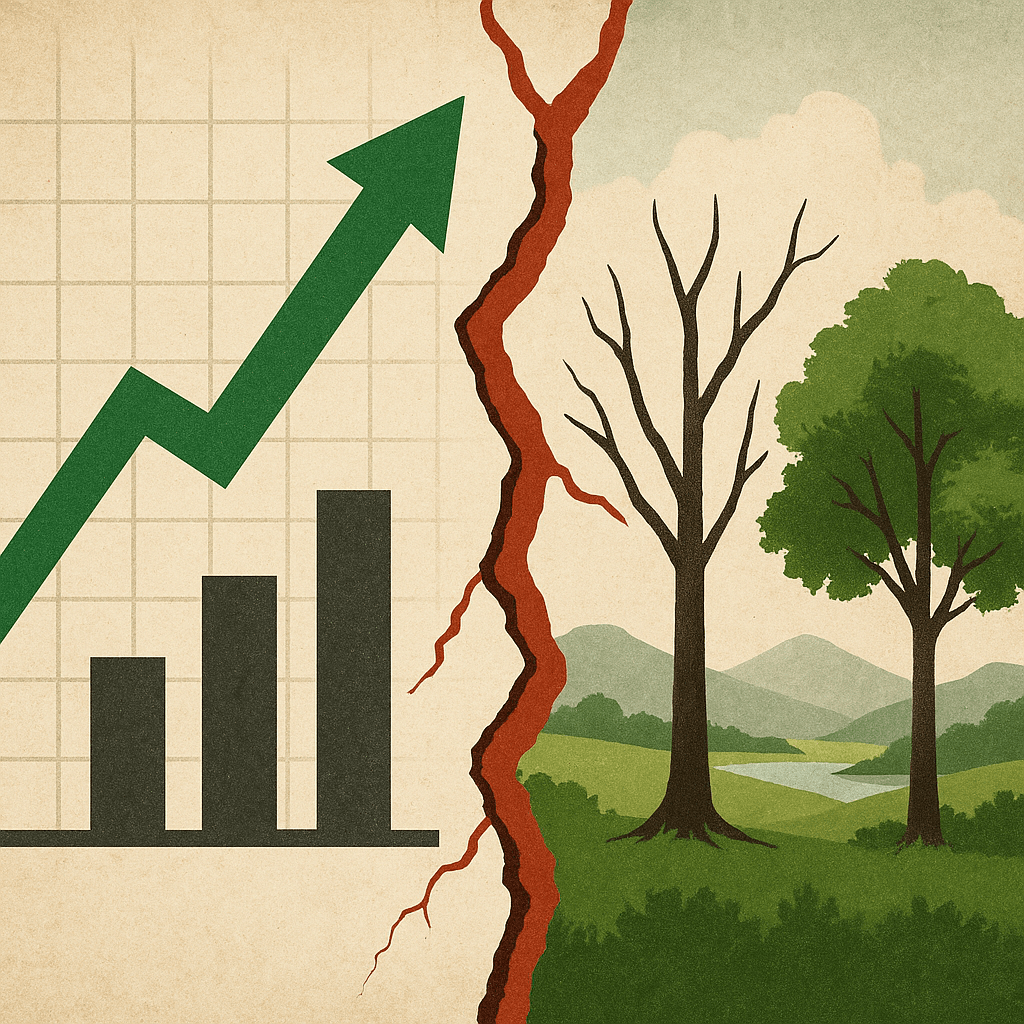
The contradiction is clear. This isn’t a failure of data. It’s a failure of alignment between our economic rules and ecological reality. It’s a systemic disconnect, and it’s painful to watch.
As someone working within a large public institution, I feel this tension regularly. I see the dissonance. I hear the language of ambition, and sometimes I see the courage behind it. But I also see how fragile these commitments can be when the winds change. And like many others, I sometimes wonder: where will real change come from?
If there’s any hope that feels real right now, it may not come from the top. It may come from smaller, less system-bound organisations, like local networks, B Corps, cooperatives, regenerative farms, mission-led SMEs. These are places where the paradigm hasn’t fully hardened into quarterly reporting cycles and shareholder appeasement. They might be able to live closer to reality, building economies and cultures that regenerate rather than extract.
This takes me back to some of the reflections shared in the book Small is Beautiful by E.F. Schumacher. In it, the idea of human-scale, values-led economic structures is explored where technology and organisation serve people and the planet, rather than the other way around. Schumacher didn’t just critique large-scale economics; he proposed new forms of corporate entities that might hold space for right livelihood, social well-being, and environmental stewardship. In the current context, this vision feels more relevant than ever.
But from a systems perspective, there’s a deeper question. Will these smaller actors carry enough weight to shift the paradigm itself? Or will the system only change when it’s forced to when something breaks so clearly and undeniably that there’s no way back?
I worry that it may take a moment of shock and awe to jolt the world out of its current groove. I hope, deeply, that such a moment isn’t too devastating when it comes.
And yet, one strangely positive outcome of this net zero backlash is that it strips away the illusion. Where once there were glossy reports and green logos masking fragile ambition, now there is clarity. The rollback, in some cases, reveals the truth that was always just beneath the surface. And with that truth comes a new kind of power. The power to choose more wisely where we place our trust, our energy, and our money.
Until then, I believe our work is to keep the thread alive.
- To question.
- To care.
- To act from integrity even when the system doesn’t reward it.
And to stay human in the middle of all this complexity.
 Mindful Trails
Leave a comment