Author: Mindful Traveller

  • The Rise of Extreme Overseas Day Trips

    There’s a certain thrill in the phrase ‘I just popped to Norway for the day.’ It feels bold, curious and undeniably modern. A trend that once might have been reserved for business travellers or eccentric millionaires is now gathering momentum among everyday adventurers.

    Often fuelled by bargain flight deals, flexible working, and a thirst for novelty, this trend has taken root particularly strongly among those chasing natural phenomena like the Northern Lights. In some cases, people land, hire a car, photograph the lights (if they appear), then turn around and fly home again before the next calendar day begins.

    There’s even a dedicated Facebook group popping up where members swap stories, compare flight paths, and offer advice on the logistics of squeezing maximum experience into minimum time. Day-tripping to Iceland, Switzerland, or even Sicily has become something of a badge of honour for a hyper-efficient form of adventure that turns travel into a kind of sport.

    It’s easy to see the appeal. No need for accommodation, time off work, or luggage. Just the joy of moving, experiencing, and returning with a story. And in a world where time is currency and novelty is addictive, it’s not hard to understand why people are drawn in.

    But the more I think about it, the more complex it feels.

    There’s the environmental tension, of course. These short-haul flights can carry a disproportionately high carbon cost per passenger. And while many day-trippers are incredibly mindful of their waste, their footprints, and their intentions, it does raise questions about how we weigh the cost of curiosity.

    Then there’s something more subtle. These fleeting trips can sometimes feel like chasing the edges of presence rather than immersing in it. Can we truly feel a place in just a few hours? Or are we ticking it off, high on the efficiency, yet possibly bypassing the depth that slower travel allows?

    None of this is said with judgment. I understand the impulse. I’ve felt it too. There’s an undeniable magic in making the most of a narrow window and turning an ordinary Tuesday into something extraordinary.

    But perhaps there’s also value in pausing to ask: What are we really chasing? Is it the feeling of having touched something rare? Is it the journey, or the story it gives us to share? And could we, perhaps, find a similar thrill in travelling a little slower. Walking a local trail at sunrise, staying longer in fewer places, or discovering that adventure doesn’t always require air miles?

    In the end, we’re all experimenting with how to live meaningfully in a fast world. Whether we choose to fly for a single meal or stay rooted for a season, perhaps the question isn’t what we do but how awake we are to the experience as it unfolds.

  • Grid Square 3: Still Waters and Secret Sets

    I began my walk at a large car park, following a wide trail skirting a cross-country horse field, where jumps lay scattered across the open space. The trail eventually led me to a large, partially fenced private fishing pond. A small plaque beside it commemorated someone who had helped establish the pond but, sadly, never had the chance to fish it. Standing there stirred memories of fishing as a teenager, of slow, sun-drenched days by the water and the quiet peace they brought.

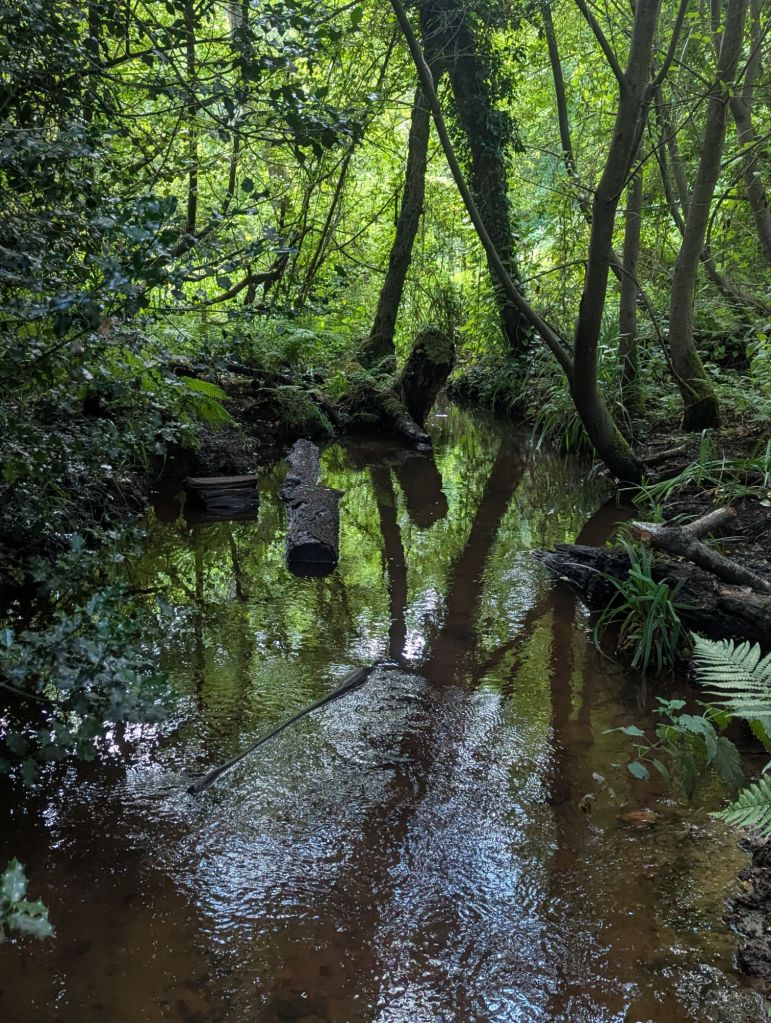
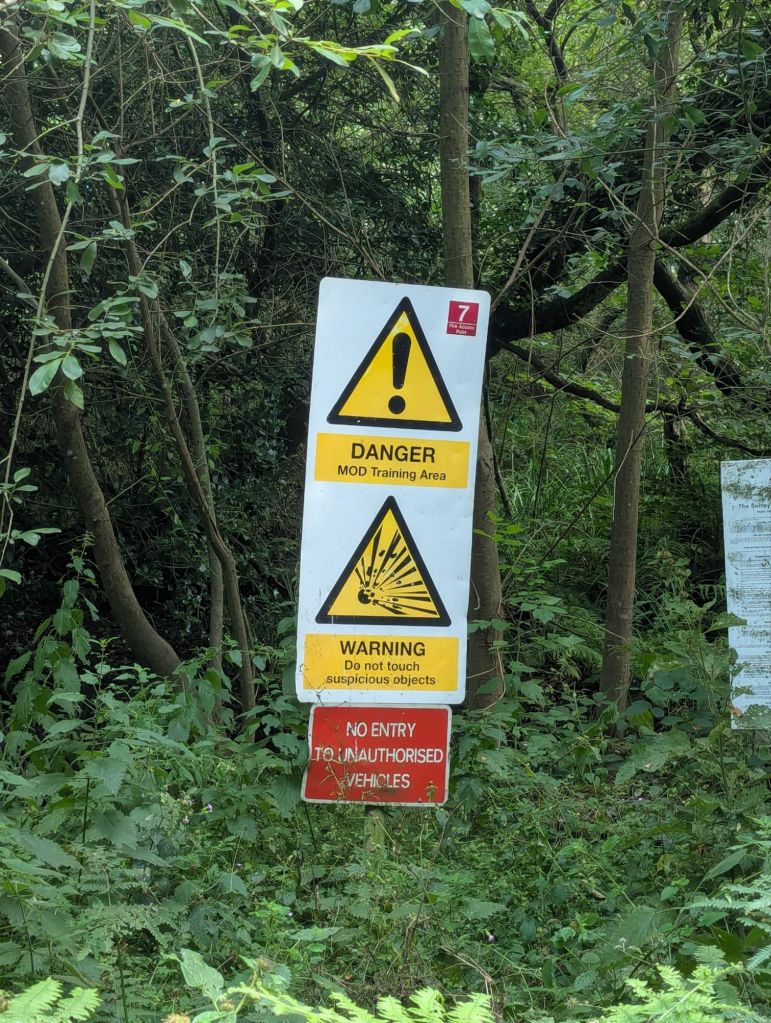
    Crossing a narrow stream, I stepped into Ministry of Defence land a vast patchwork of terrain that, despite its primary function, forms an important sanctuary for biodiversity.

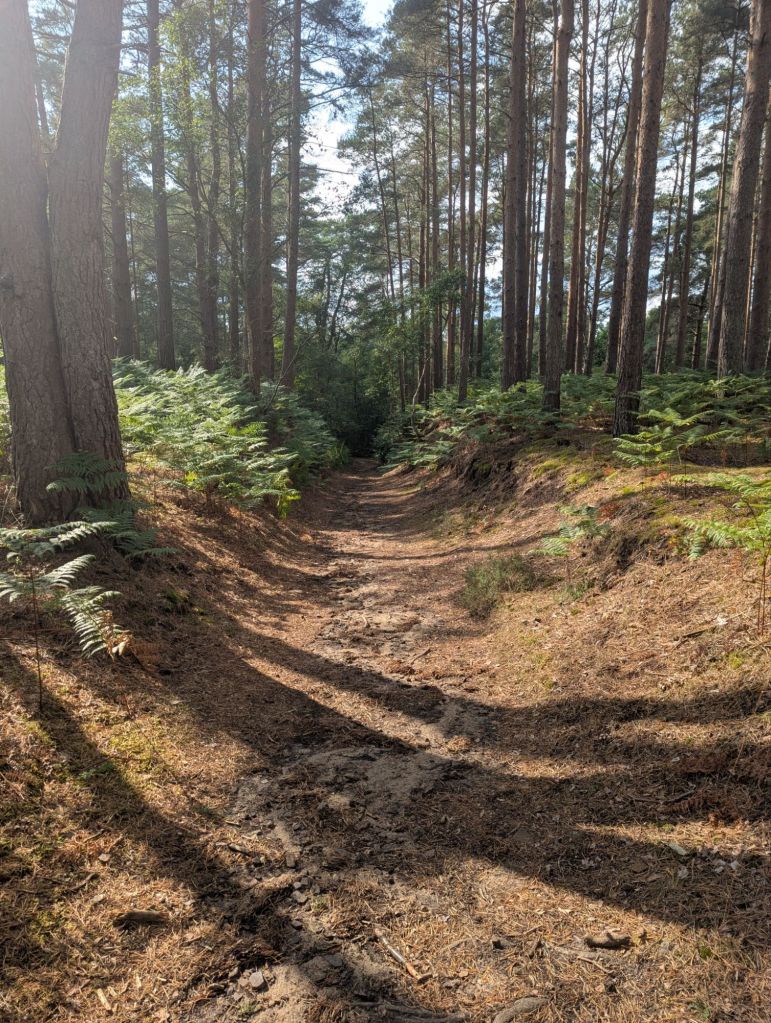
    This area was rich with life: downy birch, silver birch, Scots pine, gorse, oak, and majestic willows trailing along a river far below the sandy paths. I followed some steep, winding trails down to the river’s edge, where rope swings hung from branches, signs of children playing over the years. These joyful spots, though, were marred by patches of litter. A quiet reminder of the responsibility we all share in caring for these spaces.

    Climbing back to the main path, I spotted a buzzard soaring over the field across the river. Curious to know what else was around, I opened the Merlin app. It identified a chiffchaff, stonechat, wren, and the ever-present wood pigeon. I’m often surprised by how much more alive the woods feel when I slow down enough to listen.

    Nearing the edge of the square, I noticed what looked like a campsite, something that hadn’t shown up on any maps. As I got closer, it revealed itself to be a scout camp, complete with a fire engine parked on the track and children excitedly exploring it.

    Heading back, I planned to cross an open heath but soon encountered tents, generators, and vehicles. As I approached, a man on security duty explained that I’d stumbled onto a film set. The low tents suggested a fantasy-style camp scene, and while it blocked my intended route, it added an unexpected magic to the day.

    The detour briefly took me into neighbouring woodland before I rejoined the original square. Near the path’s edge, three porta-loos lay oddly overturned a surreal sight among the trees. From there, I looped back toward the car park.

    As I walked, I was reminded how fragmented and layered our landscapes are stitched together by private, military and community-owned spaces, each shaping how nature is allowed to thrive or falter. While some areas were fenced off or degraded, others like the MOD land offered unexpected biodiversity havens. It’s a quiet paradox: land set aside for one reason can end up protecting what is wild.

    But without a joined-up approach, these pockets risk becoming isolated fragments floating in a patchwork with no real continuity. Who owns the land, and how they choose to steward it, matters deeply. It’s not just about access, but about long-term care, connection, and intention.


    If this sparks your interest, The Lie of the Land by Guy Shrubsole is a powerful and accessible read exploring who owns the land in England and what that means for nature, access, and equity.

    Walks like this remind me that mindful exploration isn’t just about seeing more it’s about noticing what shapes the land we move through. Listening not only for birdsong but for the stories beneath our feet.

    Have you ever stumbled across something unexpected while walking? Or noticed how land ownership changes what grows, thrives or disappears?

  • Lammas: Marking the First Harvest

    Today is Lammas, an ancient festival celebrating the first fruits of the harvest, a moment in the seasonal cycle where we pause to acknowledge what has begun to ripen, both in the natural world and within ourselves.

    Traditionally observed on August 1st, Lammas (from ‘Loaf Mass’) was a time when communities would bake bread from the first grain of the season and offer it in gratitude for the earth’s abundance. There is a beautiful groundedness in this ritual, a way to be present to the quiet shift from high summer toward the first whispers of autumn.

    This morning, I marked the day by making a loaf of multi-seeded bread, using a mix of organic flour, oats, pumpkin, sunflower, and flax seeds. As I kneaded the dough, I was reminded how simple acts rooted in season and intention can connect us deeply to the rhythms of life.

    Recipe from Sally’s Baking

    Out in the garden, the signs of the season are everywhere: tomatoes ripening, bees busy, seed heads forming. And yet, this year also brought loss. Our willow tree, once a soft green marker of spring and summer, didn’t survive the intense heat. Perhaps a reflection of the broader shifts we’re witnessing. Seasonal patterns altering, biodiversity changing, the climate shaping and reshaping the world around us.

    Still, Lammas holds space for all of it. The harvest and the letting go. It invites reflection:

    • What have I grown or nurtured this year?

      What is coming to fruition in my life?

      What might need to be released as the cycle gently turns toward its next phase?
    The Three Sisters (although our squash has struggled)

    These seasonal transitions remind us of the birth and death cycles always in motion not just in the land but in ourselves.

    This also brings to mind something from Local by Alastair Humphreys, a book that explores the richness of staying rooted to place. He writes about the Japanese concept of 72 micro-seasons, each lasting just five days. With names like ‘the first dragonflies appear’ or ‘dew glistens white,’ they offer a poetic reminder that change is always unfolding, even when it feels still.

    Ways to Honour Lammas:

    • Bake something seasonal – a loaf of bread, a fruit crumble, or even just toast with local honey.
    • Gather wildflowers or herbs and make a small nature altar.
    • Reflect on your own ‘harvest’. What is maturing in your life.
    • Walk slowly, noticing subtle changes: heavier air, golden fields, tired flowers.
    • Share food with others as a small act of gratitude.

    In a world that rarely pauses, Lammas invites slowness, noticing, and gentle celebration of what is already here and what is quietly changing.

  • Guilt Trip: Pilots Torn Between Flight and the Fight for the Planet

    The Guardian released the powerful short documentary Guilt Trip: pilots torn between flight and the fight for the planet on July 10, 2025. It explores the emotional conflict faced by pilots who love their jobs but are haunted by aviation’s role in climate breakdown.

    Tensions We Share as Travellers

    At Mindful Trails, this documentary echoes a familiar tension: the deep pull toward adventure and discovery, balanced against a growing awareness of our planetary limits. We love to travel for its ability to open perspectives, create memories and connect us to the wild and the wondrous. But like the pilots in Guilt Trip, we often find ourselves asking: at what cost?

    Do we ground ourselves? Travel differently? Focus on slower, more local adventures? These questions are part of our ongoing inquiry.

    What the Film Covers

    • Firsthand climate conflict: Ex-commercial pilots George Hibberd and Todd Smith reflect on childhood dreams of flying, now complicated by guilt at contributing to climate change
    • Emotional reckoning: The doc follows their journey from aviators to climate activists, highlighting aviation workers grappling with eco-anxiety and moral responsibility
    • Community action: It showcases their involvement with Safe Landing, a community that supports aviation workers through worker-led assemblies to envision climate action within the industry

    Takeaways & Reflection Prompts

    InsightWhy It Matters
    Guilt can be empoweringIt invites responsibility, not paralysis. The film urges us to act not from shame, but from care.
    Adventure can still be consciousThe joy of exploring doesn’t have to be abandoned but it does call for honesty, creativity and re-calibration.
    Personal and systemicIt’s not just about reducing flights, it’s about re imagining mobility in ways aligned with ecological integrity.

    Mindful Next Steps

    • Watch the film: Stream it on the Guardian Documentary channel and notice what is brings up for you.
    • Reflect on your own relationship with travel: What do you want to hold onto, and what are you willing to change?
    • Explore local trails, seasonal adventures, or slower modes of travel as ways to align values with action.

    By bridging the emotional core of travel with climate consciousness, Guilt Trip offers a deeply human perspective urgently relevant to mindful travellers everywhere.

  • A Quiet Encounter at the Krishnamurti Centre: Reflections from a mindful trail inward

    As part of our Mindful Trails journey exploring slow, conscious living through both outer landscapes and inner terrains, I recently spent two nights at the Krishnamurti Centre in Hampshire. This wasn’t part of a scheduled retreat, but rather a personal pause: a chance to step into stillness and see what surfaced.

    I arrived with only a vague idea of what to expect, and that openness proved to be a gift. Without structure or agenda, I found myself gradually becoming more grounded. Much of my time was spent wandering the stunning grounds and gardens, sitting beneath trees, and simply listening. Just listening.

    There are circular walks mapped out around the centre, and I ventured further afield too. Each step felt like part of a wider letting go. Foxgloves were in bloom on the route, their presence subtle yet vibrant reminding me that even beauty can whisper.

    Meals were shared communally, and while silence wasn’t a requirement, the conversations I had were spacious and intentional, rooted in insight rather than small talk. The food was wholesome and thoughtful, aligning with the atmosphere of care that quietly infused everything.

    I spent time in the library, where Krishnamurti’s writings filled the shelves in many languages. Reading his words amidst that silence felt different from reading at home. It felt embodied. Only on the final day did I visit the quiet room. Sitting there, I experienced a deeper sinking into presence, an encounter with a stillness I recognised but not connected with for sometime.

    Since leaving, I’ve noticed this silence echoing into my daily life. A subtle shift, but real a deepening of the inner trail that supports how I move through the world.

    At Mindful Trails, we often speak of slow adventures, of finding magic in the everyday, and of tuning into both the seen and unseen. This short stay felt like an inward expedition. Less about the path underfoot, and more about the one within.

    If something in this reflection resonates with you or if you’re curious and just need a gentle nudge to take your next step, please feel free to reach out. We’re always happy to share more, swap stories, or walk alongside you for a moment on your own mindful trail.

  • Green or Grey? The UK’s Sustainable Finance U-Turn and What It Means for Mindful Money

    The UK government has announced today that it would not move forward with its planned Green Taxonomy. This was a proposed framework designed to classify which economic activities count as ‘environmentally sustainable.’

    On the surface, this may seem like a technical or niche policy decision. But it raises important questions about how we define sustainability, who gets to decide and how individuals can make ethical financial choices in the absence of clear guidelines.

    What was the UK Green Taxonomy meant to do?

    A taxonomy is, in essence, a classification system. Much like food labels tell us about ingredients and nutritional value, a green taxonomy would help investors and businesses understand the environmental impact of economic activities, whether it’s energy production, agriculture, construction, or financial products.

    The aim was to reduce greenwashing, guide sustainable investment, and align the financial sector with the UK’s climate and biodiversity goals.

    But after running a consultation between November 2024 and February 2025, with only around 45% of responses supporting the plan, the government concluded…

    ‘After careful consideration of the consultation responses, the government has concluded that a UK Taxonomy would not be the most effective tool to deliver the green transition’

    HM Treasury, July 2025

    Instead, there will be a focus on other measures: such as mandatory sustainability disclosures (UK Sustainability Reporting Standard), corporate transition plans, and clean-tech incentives.

    A step back, or a step sideways?

    Reactions have been mixed. Some sustainability advocates were disappointed, calling the decision a missed opportunity to bring clarity and consistency to a market flooded with vague claims. Others, including business groups have argued that the taxonomy would have added unnecessary complexity, especially as international standards are still evolving.

    There is truth in both positions.

    Creating a meaningful taxonomy is difficult. It involves drawing lines between what counts as ‘green’ and what doesn’t. This is a challenging endeavour in a world where nuance, context, and uncertainty often dominate. Even the EU’s taxonomy, now under revision, has faced criticism for being both too rigid and too compromised.

    Source: Bergensia

    At the same time, without any shared standards, we risk drifting into a ‘do-it-yourself’ model of sustainability, where each business defines its own criteria and investors are left to decipher what’s real and what’s marketing.

    Why does this matter for mindful money?

    For those of us trying to live and invest with intention, the government’s decision puts the spotlight back on individual responsibility and discernment. Without a clear rulebook, we need to ask better questions, look more closely, and think more systemically.

    This is not necessarily a bad thing. But it does ask more of us.

    Mindful money isn’t about outsourcing our ethics to a label or standard. It’s about slowing down, looking under the surface, and considering the wider impacts of how we spend, save, and invest. And yet, most people don’t have the time or tools to analyse every fund or company from scratch.

    That’s why shared frameworks, while imperfect can play a useful role. They don’t replace personal values, but they support them. They offer a starting point for deeper inquiry.

    So where does this leave us?

    The UK’s decision not to proceed with a taxonomy highlights a tension in our systems: between the need for clarity and the reality of complexity. Between fast action and thoughtful development. Between personal agency and public accountability.

    This moment invites reflection, not reaction.

    We can ask:

    • What does ‘sustainable’ really mean to us?
    • Who do we trust to make that judgment? ourselves, governments, or markets.
    • How can we build the skills and awareness needed to navigate green claims with greater clarity?

    What you can do next

    If you’re trying to align your money with your values, here are some ways forward:

    • Look beyond green labels. Ask about transparency, outcomes, and how impact is measured.
    • Explore independent research. Organisations like ShareAction, Ethical Consumer, or Good With Money often offer helpful breakdowns.
    • Choose simplicity. Sometimes the most ethical choices are not financial products at all, but local investments, community banks, or reducing consumption.
    • Keep learning. The terrain is shifting. Staying curious is a powerful act of mindful resistance.

    In dropping the taxonomy, the UK government hasn’t removed our ability to act but it has made the path less guided. That might feel like a setback. Or it might be an invitation: to be more awake, more collaborative, and more creative in how we shape a regenerative financial future.

    The rulebook may be gone but the question remains:

    What kind of economy are we funding with our choices?

    Check out our Mindful Money Pages to explore other key themes.

  • When the System Ignores the Science: Reflections on the Net Zero Backlash

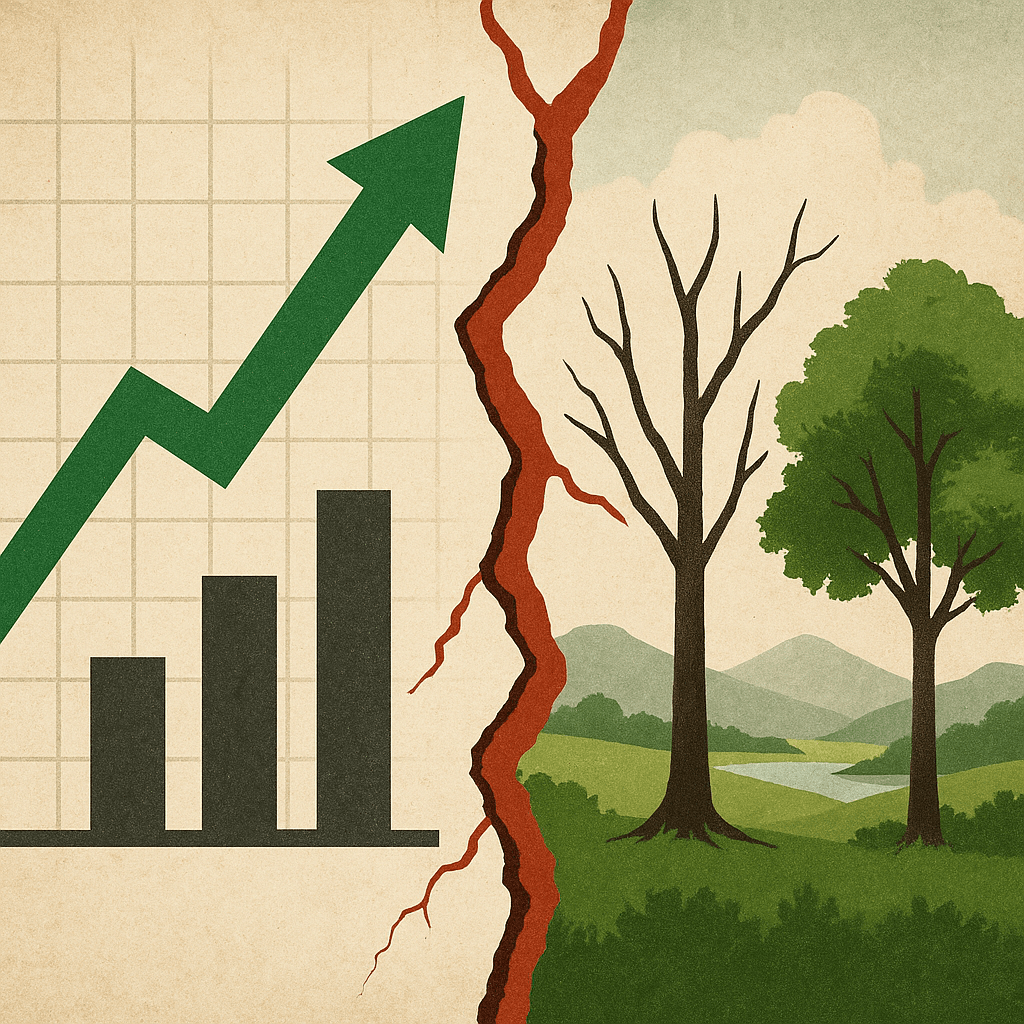
    There’s a growing trend that’s hard to ignore: more and more major companies are pulling back from their net zero commitments. When I woke this morning, I noticed another example of HSBC’s decision to exit a sector-wide Net Zero Banking Alliance. This isn’t an isolated move and follows in the footsteps of six other US banks, and it seems to reflect something deeper, a quiet unravelling of the public-facing climate ambition that many organisations once wore like a badge of progressive intent.

    At one level, this seems almost psychotic. The scientific consensus is clear. Climate change is accelerating. The impacts are not theoretical, they’re here. Droughts, floods, biodiversity loss, agricultural instability, we’re living through it. Only this June Europe has seen a spike in deaths related to the high temperature which have continued into July. And yet, even with that knowledge, powerful institutions are rolling back on the very commitments that were designed to address it.

    Why?

    One explanation is structural. The corporate and financial system continues to reward short-term returns over long-term resilience. Even where leaders may genuinely care, they are often bound by internal logic that treat carbon reduction as a burden, not an opportunity. Sustainability remains acceptable only when it doesn’t disrupt the operating model. The moment it slows things down, costs more, or challenges deeply held growth assumptions, it becomes vulnerable.

    Another explanation is the growing belief in technological salvation, such as AI, carbon capture, hydrogen, and fusion. There’s a kind of blind hope in breakthrough innovation, a hope that lets us delay uncomfortable choices in the present. But if we truly believed a breakthrough was coming, wouldn’t we be doubling down on investment, not stepping back?

    The contradiction is clear. This isn’t a failure of data. It’s a failure of alignment between our economic rules and ecological reality. It’s a systemic disconnect, and it’s painful to watch.

    As someone working within a large public institution, I feel this tension regularly. I see the dissonance. I hear the language of ambition, and sometimes I see the courage behind it. But I also see how fragile these commitments can be when the winds change. And like many others, I sometimes wonder: where will real change come from?

    If there’s any hope that feels real right now, it may not come from the top. It may come from smaller, less system-bound organisations, like local networks, B Corps, cooperatives, regenerative farms, mission-led SMEs. These are places where the paradigm hasn’t fully hardened into quarterly reporting cycles and shareholder appeasement. They might be able to live closer to reality, building economies and cultures that regenerate rather than extract.

    This takes me back to some of the reflections shared in the book Small is Beautiful by E.F. Schumacher. In it, the idea of human-scale, values-led economic structures is explored where technology and organisation serve people and the planet, rather than the other way around. Schumacher didn’t just critique large-scale economics; he proposed new forms of corporate entities that might hold space for right livelihood, social well-being, and environmental stewardship. In the current context, this vision feels more relevant than ever.

    But from a systems perspective, there’s a deeper question. Will these smaller actors carry enough weight to shift the paradigm itself? Or will the system only change when it’s forced to when something breaks so clearly and undeniably that there’s no way back?

    I worry that it may take a moment of shock and awe to jolt the world out of its current groove. I hope, deeply, that such a moment isn’t too devastating when it comes.

    And yet, one strangely positive outcome of this net zero backlash is that it strips away the illusion. Where once there were glossy reports and green logos masking fragile ambition, now there is clarity. The rollback, in some cases, reveals the truth that was always just beneath the surface. And with that truth comes a new kind of power. The power to choose more wisely where we place our trust, our energy, and our money.

    Until then, I believe our work is to keep the thread alive.

    • To question.
    • To care.
    • To act from integrity even when the system doesn’t reward it.

    And to stay human in the middle of all this complexity.

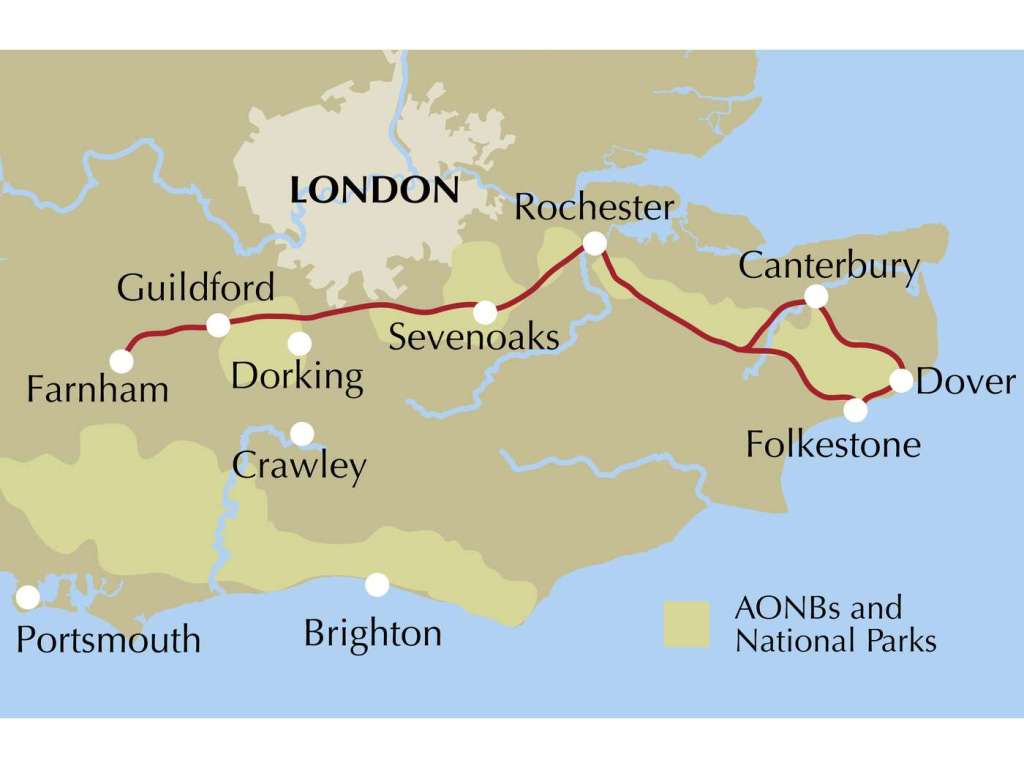
  • Walking the North Downs Way: A Journey Through Time, Friendship, and Renewal

    Walking the North Downs Way: A Journey Through Time, Friendship, and Renewal

    A First Taste of Freedom

    I started walking the North Downs Way when I was still in school with a friend. It felt like a real adventure getting to Farnham by train and starting a two-night walk to Box Hill. We weren’t very prepared, using a ramshackle collection of old camping gear and an old tarp as our shelter. But we had an amazing couple of days, getting lost, trying to cook food, and putting up the shelter. It was real freedom for a young school kid, even with feet full of blisters from ill-fitted boots.

    Returning with New Eyes

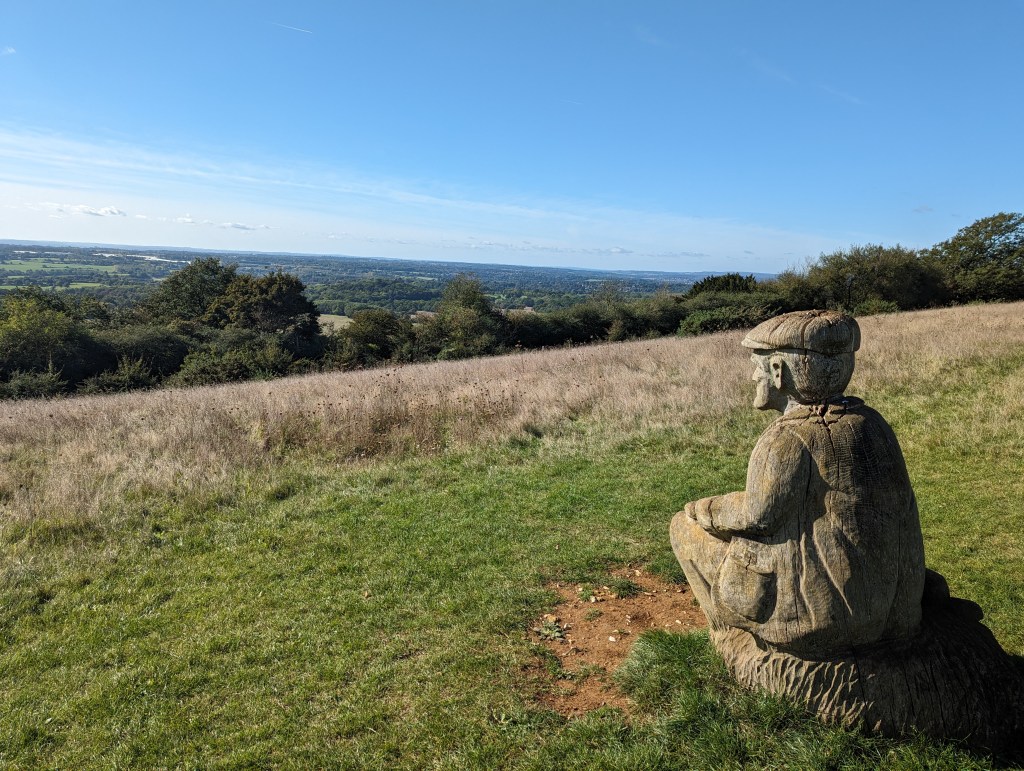
    Years later, I returned to the trail with another kindred spirit. We decided to restart the journey so they could begin it as I had. This time, we were more prepared. With several walking and mountaineering trips between us, we had lighter gear, better boots, and a clearer sense of direction. We covered the route more quickly between Farnham, through Guildford, and onto Box Hill. The section was rich with forest paths, stunning views, and historic pillboxes scattered along the route. We still used a tarp shelter, setting up camp after dark and disappearing again early in the morning.

    Over several years, we completed more two-day sections in this way. Quick, joyful bursts that focused on mileage, camaraderie, and shared laughs, often ending with a local pub. One memorable night involved stumbling into a beer festival and a late-night campsite scramble.

    Walking as Medicine

    After a period of life challenges, I felt the pull to return again, but this time alone. What began as a trail walked in youth and adventure had become something deeper: a space for healing, reflection, and reconnection.

    With the trail’s good travel connections, I began walking day sections. I planned shorter routes with time to stop and soak in the experience. There were moments of slow, meditative walking, just listening and sensing, and often a feeling of merging with the surroundings. These solitary walks gave me new perspective and a sense of peace I hadn’t realised I needed.

    Eventually, I reached Canterbury. Though the trail continues, this point felt like a natural and symbolic place to pause: a full-circle moment that brought me back to a centre point in myself.

    Following in Ancient Footsteps

    Much of the North Downs Way aligns with the historic Pilgrims’ Way, an ancient route said to have stretched from Winchester to Canterbury which are two significant cathedral cities. While the term ‘Pilgrims’ Way’ was popularised during the Victorian era, many believe it traces a route walked for centuries by those journeying to the shrine of Thomas Becket at Canterbury Cathedral.

    This connection adds another layer of reflection to the trail. Walking this path isn’t just a scenic experience, it’s also a way of treading ground steeped in story and significance. For modern pilgrims, spiritual seekers, or those simply curious about deeper journeys, this link can transform a long-distance path into a soulful rite of passage.

    Other pilgrims’ routes like the Via Francigena, which stretches from Canterbury all the way to Rome, also share this sacred starting point, reminding us that Canterbury is not an end, but often a beginning.

    On the Evolving Nature of a Journey

    One thing that’s stood out across the years is how age and maturity reshape the journey. In my youth, walks were energetic and driven by challenges. More about how far, how fast, how wild. As I grew older, the same path invited a gentler approach. Walking became more about connection than conquest; more about the journey than the destination.

    A Note on Wild Camping

    While wild camping is technically not allowed on the North Downs Way, we made every effort to follow leave-no-trace principles. Arriving late, departing early, and never leaving a mark. Although I can’t advocate it for legal reasons, I do acknowledge its role in our experience.

    Interested in Walking the North Downs Way?

    If anyone is interested or has questions, feel free to get in touch. In the coming months, I plan to offer introductory walking sessions from Farnham to Guildford for those looking to begin their own journey but need a little extra confidence to get started.

    Further Resources

  • A Mindful Moment Between Meetings

    Sometimes, a simple lunchtime walk becomes something more.

    During a particularly difficult period in my career, I found myself pulled toward green spaces in search of a reset. These solo escapes, sometimes just 20 minutes long became something like medicine. A picnic bench under a tree. A quiet trail just past the last row of houses. A patch of forest where you could feel the day exhale.

    What started as a breath of fresh air turned into a quiet ritual. I began to spend longer in these outdoor pockets of calm, and on some days, even joined video meetings from woodland clearings or grassy meadows. To my surprise, the people on the other end of the call noticed too the sense of calm, the stillness. It became something I shared, not just something I needed.

    I also brought a sense of curiosity to these micro adventures. Using the Merlin Bird ID app to learn birdsong, or plant ID apps to explore what was growing around me, gave these moments texture and meaning. It wasn’t about covering ground it was about noticing the ground beneath me.

    These mindful moments reminded me:

    • That we don’t always need big plans to feel grounded
    • That nature, even in small doses, can be powerful
    • That connection can be found just a few steps outside the usual routine

    3 Ways to Find a Mindful Moment Near Work

    1. Go solo and slow. Take 15–30 minutes to explore nearby green space without a goal. Walk slowly, notice your breath, your senses, and your surroundings.

    2. Pack a picnic (even if it’s small). A sandwich on a shaded bench can feel like a full reset. Eating slowly, in fresh air, helps you reconnect with your body and the moment.

    3. Let curiosity guide you. Try an app like Merlin or Seek to explore the natural world around you. Notice the birds, plants, textures, and weather patterns you often miss.

    Final Thought

    You don’t have to go far to go deep. Whether it’s a patch of trees near the office or a meadow tucked behind a housing estate, these small moments can shift your perspective and your day.

    If you’ve found your own micro escapes near work, we’d love to hear them.

  • Cycling Slow in Belgium: Family Adventures on Two Wheels

    Cycling Slow in Belgium: Family Adventures on Two Wheels

    Last summer, we discovered just how perfect Belgium is for slow travel. Not by train, or by car, but by bike. With flat landscapes, well-marked cycle routes, and a network of charming towns and pop-up bars, it turned out to be the ideal place for a family-friendly cycling holiday. The pace was gentle, the beer was local, and the chocolate and waffles were heavenly.

    Why Belgium Works for Cycling Travel

    We based ourselves in the Flanders region, which is known for its flat terrain and gentle routes. It’s ideal for new or returning cyclists and especially well-suited to family travel. It was also connected to the Kempen Route which stretches between Antwerp and Maasmechelen, offering plenty of variety, winding through woods, across expansive stretches of heath, dunes and lakes as well as heritage mining areas.

    For those looking for a bit more adventure, Belgium also offers more challenging terrain, particularly in the Ardennes region, where hilly landscapes and forest trails await more experienced riders.

    Belgium’s infrastructure makes it incredibly accessible by bike. The terrain is mostly flat, meaning even the youngest riders or new cyclists can manage longer distances with ease. Designated cycling networks, like the well-known Fietsnetwerk are clearly signed and easy to follow, reducing stress and allowing you to focus on the joy of the journey.

    These routes link towns, parks, forests, and cultural landmarks, with plenty of rest spots, bike-friendly cafés, and surprise pop-up bars in the summer months. It’s the kind of place where the cycling experience feels effortless and welcoming.

    A Family-Friendly Freedom

    We travelled every day by bike, often with no firm plan, just heading to nearby villages, cafés, or markets. Our children gained so much confidence through daily cycling, learning to navigate, ride further, and enjoying the independence it offered.

    For us as parents, it meant slowing down enough to really notice where we were, from golden wheat fields to steam-side paths and having time to stop, paddle in streams, or simply enjoy a shaded bench under a tree.

    Renting vs Bringing Your Own

    You could bring your own bikes over (especially easy via Eurostar or ferry), but we chose to rent locally and we’re glad we did. The rental bikes were far more comfortable than our own mountain bikes at home. They came with wide seats, upright posture, and baskets which were ideal for picnic supplies or market finds. For longer days or family rides, it made all the difference.

    Bike hire was affordable and widely available, with many shops offering family-friendly options, including kids’ bikes, trailers, and e-bikes.

    Slowing Down for a Local Beer

    Belgium is, of course, famous for its beer and many of the towns we visited had open-air summer bars or taverns right on the route. These relaxed stops became part of our rhythm: a morning ride, a midday beer or lemonade, and an afternoon meander home.

    It was the perfect balance of movement and pause. Travel not just as a way of getting from A to B, but as a way of experiencing a place with all the senses.

    But a word of caution! Some of the brews are very strong.

    Reflections on Travel by Bike

    There’s something quietly powerful about arriving somewhere under your own steam. Travelling by bike invited us to engage with the landscape more deeply, moving at a pace that allowed for noticing. The way the light moved through the trees. The call of birds. The smell of warm summer fields.

    In many ways, this was one of our most memorable family trips, not for the sights we ticked off, but for the way it felt. Free, connected, and delightfully simple.

    Final Thoughts

    Belgium reminded us that adventure doesn’t need to be dramatic to be meaningful. Sometimes it looks like smooth cycle paths, a basket full of picnic snacks, and just enough sun to warm your back.

    Whether you bring your own bikes or rent locally, Belgium is ready-made for slow, mindful family travel on two wheels.