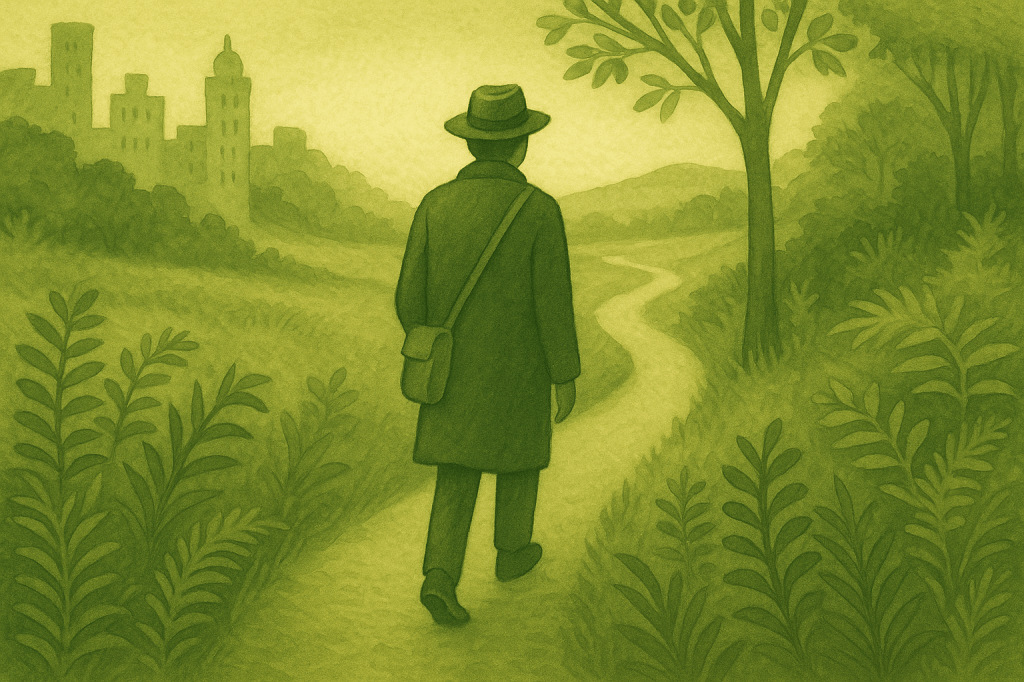
Category: Mindful Living

  • The Rise of Extreme Overseas Day Trips

    There’s a certain thrill in the phrase ‘I just popped to Norway for the day.’ It feels bold, curious and undeniably modern. A trend that once might have been reserved for business travellers or eccentric millionaires is now gathering momentum among everyday adventurers.

    Often fuelled by bargain flight deals, flexible working, and a thirst for novelty, this trend has taken root particularly strongly among those chasing natural phenomena like the Northern Lights. In some cases, people land, hire a car, photograph the lights (if they appear), then turn around and fly home again before the next calendar day begins.

    There’s even a dedicated Facebook group popping up where members swap stories, compare flight paths, and offer advice on the logistics of squeezing maximum experience into minimum time. Day-tripping to Iceland, Switzerland, or even Sicily has become something of a badge of honour for a hyper-efficient form of adventure that turns travel into a kind of sport.

    It’s easy to see the appeal. No need for accommodation, time off work, or luggage. Just the joy of moving, experiencing, and returning with a story. And in a world where time is currency and novelty is addictive, it’s not hard to understand why people are drawn in.

    But the more I think about it, the more complex it feels.

    There’s the environmental tension, of course. These short-haul flights can carry a disproportionately high carbon cost per passenger. And while many day-trippers are incredibly mindful of their waste, their footprints, and their intentions, it does raise questions about how we weigh the cost of curiosity.

    Then there’s something more subtle. These fleeting trips can sometimes feel like chasing the edges of presence rather than immersing in it. Can we truly feel a place in just a few hours? Or are we ticking it off, high on the efficiency, yet possibly bypassing the depth that slower travel allows?

    None of this is said with judgment. I understand the impulse. I’ve felt it too. There’s an undeniable magic in making the most of a narrow window and turning an ordinary Tuesday into something extraordinary.

    But perhaps there’s also value in pausing to ask: What are we really chasing? Is it the feeling of having touched something rare? Is it the journey, or the story it gives us to share? And could we, perhaps, find a similar thrill in travelling a little slower. Walking a local trail at sunrise, staying longer in fewer places, or discovering that adventure doesn’t always require air miles?

    In the end, we’re all experimenting with how to live meaningfully in a fast world. Whether we choose to fly for a single meal or stay rooted for a season, perhaps the question isn’t what we do but how awake we are to the experience as it unfolds.

  • Lammas: Marking the First Harvest

    Today is Lammas, an ancient festival celebrating the first fruits of the harvest, a moment in the seasonal cycle where we pause to acknowledge what has begun to ripen, both in the natural world and within ourselves.

    Traditionally observed on August 1st, Lammas (from ‘Loaf Mass’) was a time when communities would bake bread from the first grain of the season and offer it in gratitude for the earth’s abundance. There is a beautiful groundedness in this ritual, a way to be present to the quiet shift from high summer toward the first whispers of autumn.

    This morning, I marked the day by making a loaf of multi-seeded bread, using a mix of organic flour, oats, pumpkin, sunflower, and flax seeds. As I kneaded the dough, I was reminded how simple acts rooted in season and intention can connect us deeply to the rhythms of life.

    Recipe from Sally’s Baking

    Out in the garden, the signs of the season are everywhere: tomatoes ripening, bees busy, seed heads forming. And yet, this year also brought loss. Our willow tree, once a soft green marker of spring and summer, didn’t survive the intense heat. Perhaps a reflection of the broader shifts we’re witnessing. Seasonal patterns altering, biodiversity changing, the climate shaping and reshaping the world around us.

    Still, Lammas holds space for all of it. The harvest and the letting go. It invites reflection:

    • What have I grown or nurtured this year?

      What is coming to fruition in my life?

      What might need to be released as the cycle gently turns toward its next phase?
    The Three Sisters (although our squash has struggled)

    These seasonal transitions remind us of the birth and death cycles always in motion not just in the land but in ourselves.

    This also brings to mind something from Local by Alastair Humphreys, a book that explores the richness of staying rooted to place. He writes about the Japanese concept of 72 micro-seasons, each lasting just five days. With names like ‘the first dragonflies appear’ or ‘dew glistens white,’ they offer a poetic reminder that change is always unfolding, even when it feels still.

    Ways to Honour Lammas:

    • Bake something seasonal – a loaf of bread, a fruit crumble, or even just toast with local honey.
    • Gather wildflowers or herbs and make a small nature altar.
    • Reflect on your own ‘harvest’. What is maturing in your life.
    • Walk slowly, noticing subtle changes: heavier air, golden fields, tired flowers.
    • Share food with others as a small act of gratitude.

    In a world that rarely pauses, Lammas invites slowness, noticing, and gentle celebration of what is already here and what is quietly changing.

  • Guilt Trip: Pilots Torn Between Flight and the Fight for the Planet

    The Guardian released the powerful short documentary Guilt Trip: pilots torn between flight and the fight for the planet on July 10, 2025. It explores the emotional conflict faced by pilots who love their jobs but are haunted by aviation’s role in climate breakdown.

    Tensions We Share as Travellers

    At Mindful Trails, this documentary echoes a familiar tension: the deep pull toward adventure and discovery, balanced against a growing awareness of our planetary limits. We love to travel for its ability to open perspectives, create memories and connect us to the wild and the wondrous. But like the pilots in Guilt Trip, we often find ourselves asking: at what cost?

    Do we ground ourselves? Travel differently? Focus on slower, more local adventures? These questions are part of our ongoing inquiry.

    What the Film Covers

    • Firsthand climate conflict: Ex-commercial pilots George Hibberd and Todd Smith reflect on childhood dreams of flying, now complicated by guilt at contributing to climate change
    • Emotional reckoning: The doc follows their journey from aviators to climate activists, highlighting aviation workers grappling with eco-anxiety and moral responsibility
    • Community action: It showcases their involvement with Safe Landing, a community that supports aviation workers through worker-led assemblies to envision climate action within the industry

    Takeaways & Reflection Prompts

    InsightWhy It Matters
    Guilt can be empoweringIt invites responsibility, not paralysis. The film urges us to act not from shame, but from care.
    Adventure can still be consciousThe joy of exploring doesn’t have to be abandoned but it does call for honesty, creativity and re-calibration.
    Personal and systemicIt’s not just about reducing flights, it’s about re imagining mobility in ways aligned with ecological integrity.

    Mindful Next Steps

    • Watch the film: Stream it on the Guardian Documentary channel and notice what is brings up for you.
    • Reflect on your own relationship with travel: What do you want to hold onto, and what are you willing to change?
    • Explore local trails, seasonal adventures, or slower modes of travel as ways to align values with action.

    By bridging the emotional core of travel with climate consciousness, Guilt Trip offers a deeply human perspective urgently relevant to mindful travellers everywhere.

  • A Quiet Encounter at the Krishnamurti Centre: Reflections from a mindful trail inward

    As part of our Mindful Trails journey exploring slow, conscious living through both outer landscapes and inner terrains, I recently spent two nights at the Krishnamurti Centre in Hampshire. This wasn’t part of a scheduled retreat, but rather a personal pause: a chance to step into stillness and see what surfaced.

    I arrived with only a vague idea of what to expect, and that openness proved to be a gift. Without structure or agenda, I found myself gradually becoming more grounded. Much of my time was spent wandering the stunning grounds and gardens, sitting beneath trees, and simply listening. Just listening.

    There are circular walks mapped out around the centre, and I ventured further afield too. Each step felt like part of a wider letting go. Foxgloves were in bloom on the route, their presence subtle yet vibrant reminding me that even beauty can whisper.

    Meals were shared communally, and while silence wasn’t a requirement, the conversations I had were spacious and intentional, rooted in insight rather than small talk. The food was wholesome and thoughtful, aligning with the atmosphere of care that quietly infused everything.

    I spent time in the library, where Krishnamurti’s writings filled the shelves in many languages. Reading his words amidst that silence felt different from reading at home. It felt embodied. Only on the final day did I visit the quiet room. Sitting there, I experienced a deeper sinking into presence, an encounter with a stillness I recognised but not connected with for sometime.

    Since leaving, I’ve noticed this silence echoing into my daily life. A subtle shift, but real a deepening of the inner trail that supports how I move through the world.

    At Mindful Trails, we often speak of slow adventures, of finding magic in the everyday, and of tuning into both the seen and unseen. This short stay felt like an inward expedition. Less about the path underfoot, and more about the one within.

    If something in this reflection resonates with you or if you’re curious and just need a gentle nudge to take your next step, please feel free to reach out. We’re always happy to share more, swap stories, or walk alongside you for a moment on your own mindful trail.

  • A Mindful Moment Between Meetings

    Sometimes, a simple lunchtime walk becomes something more.

    During a particularly difficult period in my career, I found myself pulled toward green spaces in search of a reset. These solo escapes, sometimes just 20 minutes long became something like medicine. A picnic bench under a tree. A quiet trail just past the last row of houses. A patch of forest where you could feel the day exhale.

    What started as a breath of fresh air turned into a quiet ritual. I began to spend longer in these outdoor pockets of calm, and on some days, even joined video meetings from woodland clearings or grassy meadows. To my surprise, the people on the other end of the call noticed too the sense of calm, the stillness. It became something I shared, not just something I needed.

    I also brought a sense of curiosity to these micro adventures. Using the Merlin Bird ID app to learn birdsong, or plant ID apps to explore what was growing around me, gave these moments texture and meaning. It wasn’t about covering ground it was about noticing the ground beneath me.

    These mindful moments reminded me:

    • That we don’t always need big plans to feel grounded
    • That nature, even in small doses, can be powerful
    • That connection can be found just a few steps outside the usual routine

    3 Ways to Find a Mindful Moment Near Work

    1. Go solo and slow. Take 15–30 minutes to explore nearby green space without a goal. Walk slowly, notice your breath, your senses, and your surroundings.

    2. Pack a picnic (even if it’s small). A sandwich on a shaded bench can feel like a full reset. Eating slowly, in fresh air, helps you reconnect with your body and the moment.

    3. Let curiosity guide you. Try an app like Merlin or Seek to explore the natural world around you. Notice the birds, plants, textures, and weather patterns you often miss.

    Final Thought

    You don’t have to go far to go deep. Whether it’s a patch of trees near the office or a meadow tucked behind a housing estate, these small moments can shift your perspective and your day.

    If you’ve found your own micro escapes near work, we’d love to hear them.

  • The Evolving Flâneur: From Urban Streets to Mindful Trails

    A Brief Stroll Through History

    The flâneur first appeared in 19th-century Paris, a figure caught between observer and participant, strolling aimlessly through boulevards, arcades and alleyways. Made famous by writers like Charles Baudelaire and later thinkers such as Walter Benjamin, the flâneur was not simply a loiterer, but a thoughtful witness to the pulse of the modern city. A connoisseur of the everyday. A collector of impressions.

    While the flâneur was traditionally a solitary, often male figure drifting through the city with a detached gaze, this role has not gone without critique. His ability to wander freely was, in many ways, a product of social privilege, economic freedom, racial invisibility and gender safety.

    What interests us at Mindful Trails is how this idea can evolve: from the disconnected observer to the eco-flâneur, someone who notices not only people and architecture but also lichen on a wall, the call of a blackbird, or the dew on the web.

    In that sense, flânerie becomes more than aesthetic, it becomes relational. No longer a passive drifting, but a quiet form of belonging. A letting go of the self-as-separate. This has echoes of Buddhist mindfulness: walking not to consume, but to notice. Not to detach from the world, but to realise we were never separate from it in the first place.

    For the flâneur, the walk was the point. The destination was irrelevant. What mattered was immersion in crowds, architecture, shadows, rhythms. This was slow observation as a quiet act of rebellion against speed, structure and productivity.

    Expanding the Practice: From Streets to Streams

    While the original flâneur wandered city streets, the spirit of flânerie can go anywhere the mind and feet are willing to follow. A country lane. A patch of waste ground. A woodland path. A canal towpath. A shoreline.

    At Mindful Trails, we’ve found that this same attentive wandering applies beautifully to natural or hybrid landscapes. Noticing the curl of a leaf. The chatter of jackdaws. The cracks in a paving stone. The worn footpath trodden by centuries of quiet footsteps. This kind of mindful wandering softens the boundary between ‘urban’ and ‘wild.’

    In fact, nature is never truly absent. The moss between bricks, the gull above the car park, the tree pushing up through the pavemen. Flânerie, when approached with mindfulness, invites us to notice that nature is everywhere if we slow down enough to see it.


    Wandering as Resistance

    In a world that values speed, productivity and goals, to walk slowly and observe without purpose is an act of quiet resistance. It reconnects us with our senses. It opens the door to creativity, curiosity and calm.

    The mindful flâneur is not necessarily a romantic figure in a long coat anymore. They are a parent on a slow walk with a child. A solo explorer taking time to watch the light shift through trees. A traveller who chooses to walk between villages rather than rush through them.

    Slowing Into Connection

    One thing I’ve noticed on my own walks is how presence changes pace. The more I slow down, the more my body begins to sync with the rhythm of the place, be it woodland, coast, or quiet backstreet. My feet respond to the terrain, my breath settles with the breeze, and my awareness gently shifts from self to surroundings.

    It’s as if I’m no longer passing through a landscape, but becoming part of it.

    In this way, the flâneur evolves from someone observing life, to someone rejoining it. Moving from a human-centred gaze to a more humble noticing of all life. The moss on the stone. The red kite calling above. The silence between bird song.

    This, for me, is where flânerie meets mindful trails. Where wandering becomes belonging.

    A Mindful Trails Invitation

    You don’t need Parisian arcades or a curated route. You just need time, awareness and a willingness to follow your feet. Whether you’re walking through a village high street the edge of a woodland, or the hinterland of the edgelands a term coined by Marion Shoard, the flâneur mindset invites you to ask:

    What do I notice when I stop trying to get anywhere fast?

    • What do I notice when I stop trying to get anywhere fast?
    • What’s usually invisible but now stands out?
    • What textures, sounds or patterns pull me in?

    At Mindful Trails, we think this spirit of exploration belongs to everyone, children and adults alike. It’s not about covering ground, but deepening it.

    So the next time you go out for a walk, try leaving your destination behind. Wander slowly. Let your surroundings speak. You might be surprised by what you find.

    🌍 Further Wandering: Related Resources


    Slow Ways – A grassroots initiative mapping walking routes between towns and cities across the UK. Perfect for slow, mindful journeys that mirror the spirit of the flâneur.

    Street Wisdom – An organisation offering guided urban walks to unlock insight and creativity through attention and presence.