
The UK government has announced today that it would not move forward with its planned Green Taxonomy. This was a proposed framework designed to classify which economic activities count as ‘environmentally sustainable.’
On the surface, this may seem like a technical or niche policy decision. But it raises important questions about how we define sustainability, who gets to decide and how individuals can make ethical financial choices in the absence of clear guidelines.
What was the UK Green Taxonomy meant to do?
A taxonomy is, in essence, a classification system. Much like food labels tell us about ingredients and nutritional value, a green taxonomy would help investors and businesses understand the environmental impact of economic activities, whether it’s energy production, agriculture, construction, or financial products.
The aim was to reduce greenwashing, guide sustainable investment, and align the financial sector with the UK’s climate and biodiversity goals.
But after running a consultation between November 2024 and February 2025, with only around 45% of responses supporting the plan, the government concluded…
‘After careful consideration of the consultation responses, the government has concluded that a UK Taxonomy would not be the most effective tool to deliver the green transition’
HM Treasury, July 2025
Instead, there will be a focus on other measures: such as mandatory sustainability disclosures (UK Sustainability Reporting Standard), corporate transition plans, and clean-tech incentives.
A step back, or a step sideways?
Reactions have been mixed. Some sustainability advocates were disappointed, calling the decision a missed opportunity to bring clarity and consistency to a market flooded with vague claims. Others, including business groups have argued that the taxonomy would have added unnecessary complexity, especially as international standards are still evolving.
There is truth in both positions.
Creating a meaningful taxonomy is difficult. It involves drawing lines between what counts as ‘green’ and what doesn’t. This is a challenging endeavour in a world where nuance, context, and uncertainty often dominate. Even the EU’s taxonomy, now under revision, has faced criticism for being both too rigid and too compromised.

At the same time, without any shared standards, we risk drifting into a ‘do-it-yourself’ model of sustainability, where each business defines its own criteria and investors are left to decipher what’s real and what’s marketing.
Why does this matter for mindful money?
For those of us trying to live and invest with intention, the government’s decision puts the spotlight back on individual responsibility and discernment. Without a clear rulebook, we need to ask better questions, look more closely, and think more systemically.
This is not necessarily a bad thing. But it does ask more of us.
Mindful money isn’t about outsourcing our ethics to a label or standard. It’s about slowing down, looking under the surface, and considering the wider impacts of how we spend, save, and invest. And yet, most people don’t have the time or tools to analyse every fund or company from scratch.
That’s why shared frameworks, while imperfect can play a useful role. They don’t replace personal values, but they support them. They offer a starting point for deeper inquiry.
So where does this leave us?
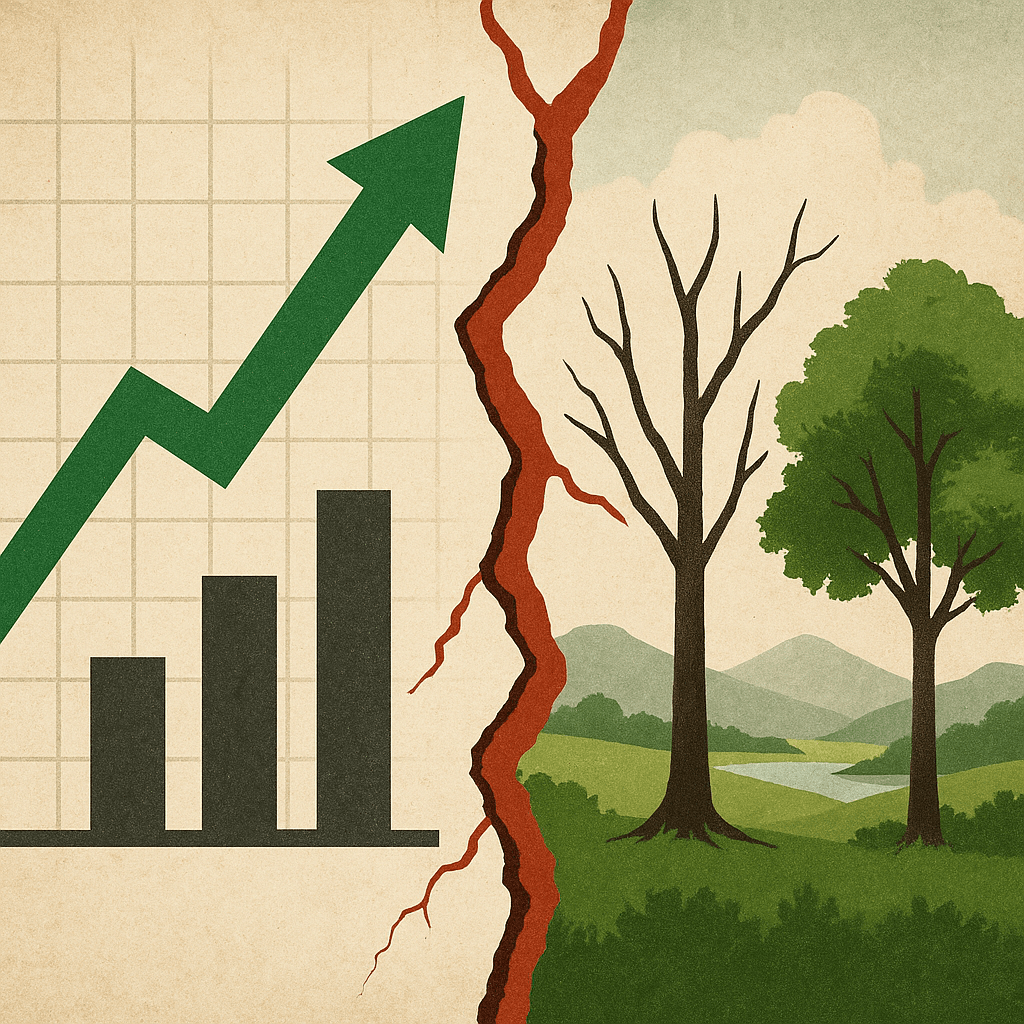
The UK’s decision not to proceed with a taxonomy highlights a tension in our systems: between the need for clarity and the reality of complexity. Between fast action and thoughtful development. Between personal agency and public accountability.
This moment invites reflection, not reaction.
We can ask:
- What does ‘sustainable’ really mean to us?
- Who do we trust to make that judgment? ourselves, governments, or markets.
- How can we build the skills and awareness needed to navigate green claims with greater clarity?
What you can do next
If you’re trying to align your money with your values, here are some ways forward:
- Look beyond green labels. Ask about transparency, outcomes, and how impact is measured.
- Explore independent research. Organisations like ShareAction, Ethical Consumer, or Good With Money often offer helpful breakdowns.
- Choose simplicity. Sometimes the most ethical choices are not financial products at all, but local investments, community banks, or reducing consumption.
- Keep learning. The terrain is shifting. Staying curious is a powerful act of mindful resistance.
In dropping the taxonomy, the UK government hasn’t removed our ability to act but it has made the path less guided. That might feel like a setback. Or it might be an invitation: to be more awake, more collaborative, and more creative in how we shape a regenerative financial future.
The rulebook may be gone but the question remains:
‘What kind of economy are we funding with our choices?‘
Check out our Mindful Money Pages to explore other key themes.

 Mindful Trails