
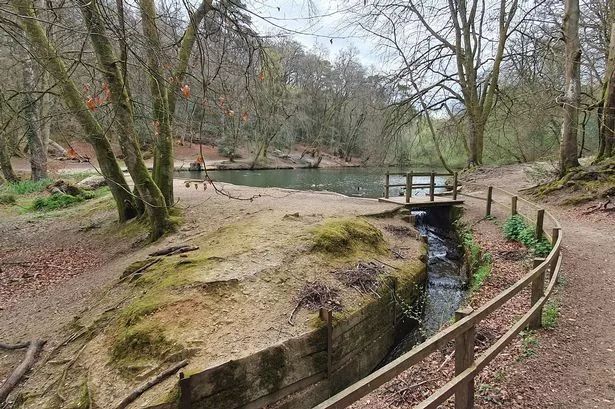
I began my walk at a large car park, following a wide trail skirting a cross-country horse field, where jumps lay scattered across the open space. The trail eventually led me to a large, partially fenced private fishing pond. A small plaque beside it commemorated someone who had helped establish the pond but, sadly, never had the chance to fish it. Standing there stirred memories of fishing as a teenager, of slow, sun-drenched days by the water and the quiet peace they brought.

Crossing a narrow stream, I stepped into Ministry of Defence land a vast patchwork of terrain that, despite its primary function, forms an important sanctuary for biodiversity.
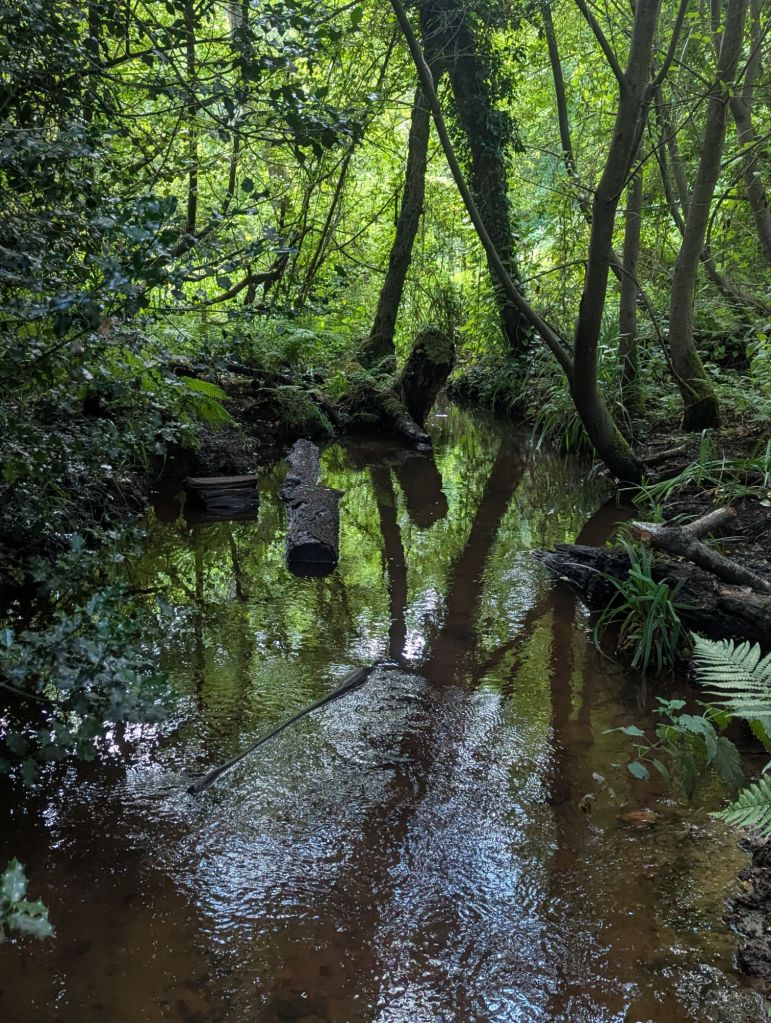
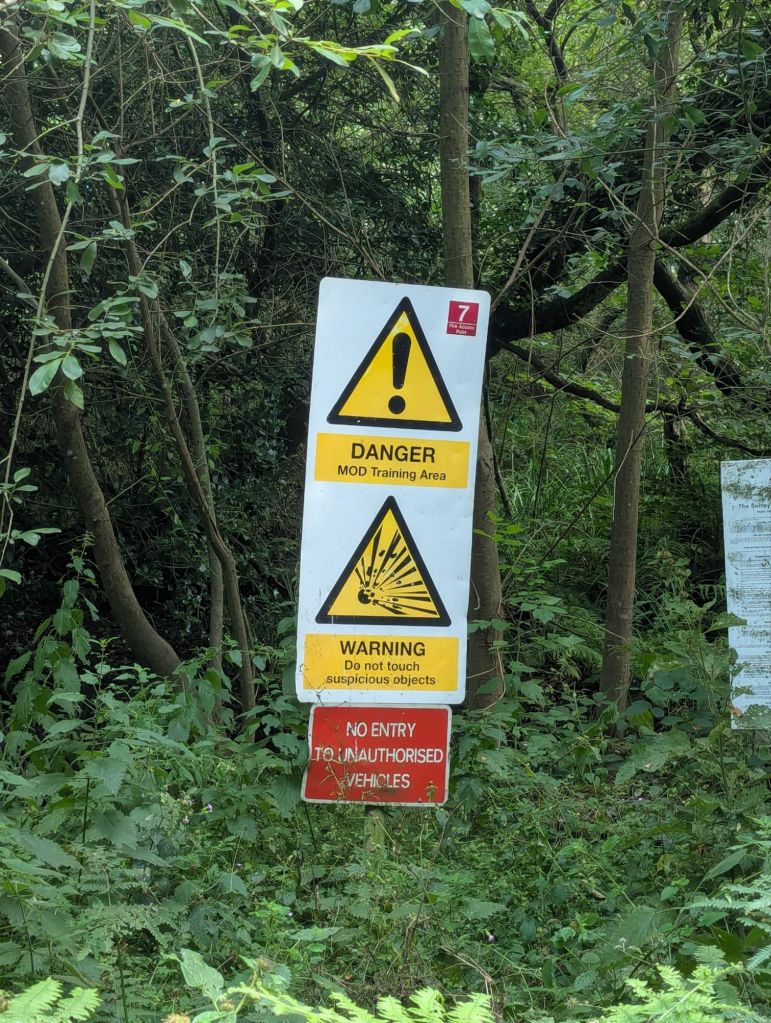
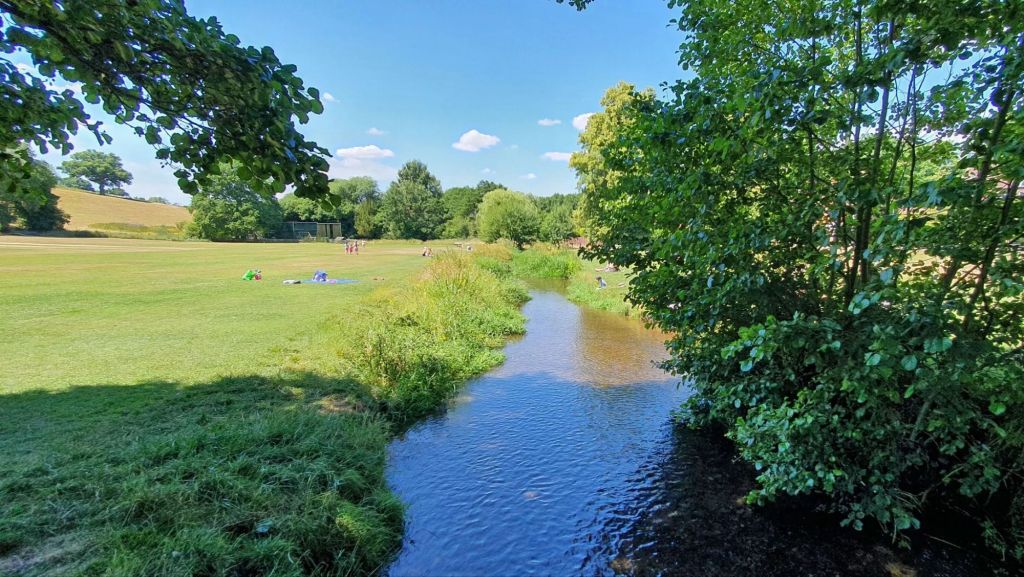
This area was rich with life: downy birch, silver birch, Scots pine, gorse, oak, and majestic willows trailing along a river far below the sandy paths. I followed some steep, winding trails down to the river’s edge, where rope swings hung from branches, signs of children playing over the years. These joyful spots, though, were marred by patches of litter. A quiet reminder of the responsibility we all share in caring for these spaces.

Climbing back to the main path, I spotted a buzzard soaring over the field across the river. Curious to know what else was around, I opened the Merlin app. It identified a chiffchaff, stonechat, wren, and the ever-present wood pigeon. I’m often surprised by how much more alive the woods feel when I slow down enough to listen.
Nearing the edge of the square, I noticed what looked like a campsite, something that hadn’t shown up on any maps. As I got closer, it revealed itself to be a scout camp, complete with a fire engine parked on the track and children excitedly exploring it.
Heading back, I planned to cross an open heath but soon encountered tents, generators, and vehicles. As I approached, a man on security duty explained that I’d stumbled onto a film set. The low tents suggested a fantasy-style camp scene, and while it blocked my intended route, it added an unexpected magic to the day.

The detour briefly took me into neighbouring woodland before I rejoined the original square. Near the path’s edge, three porta-loos lay oddly overturned a surreal sight among the trees. From there, I looped back toward the car park.

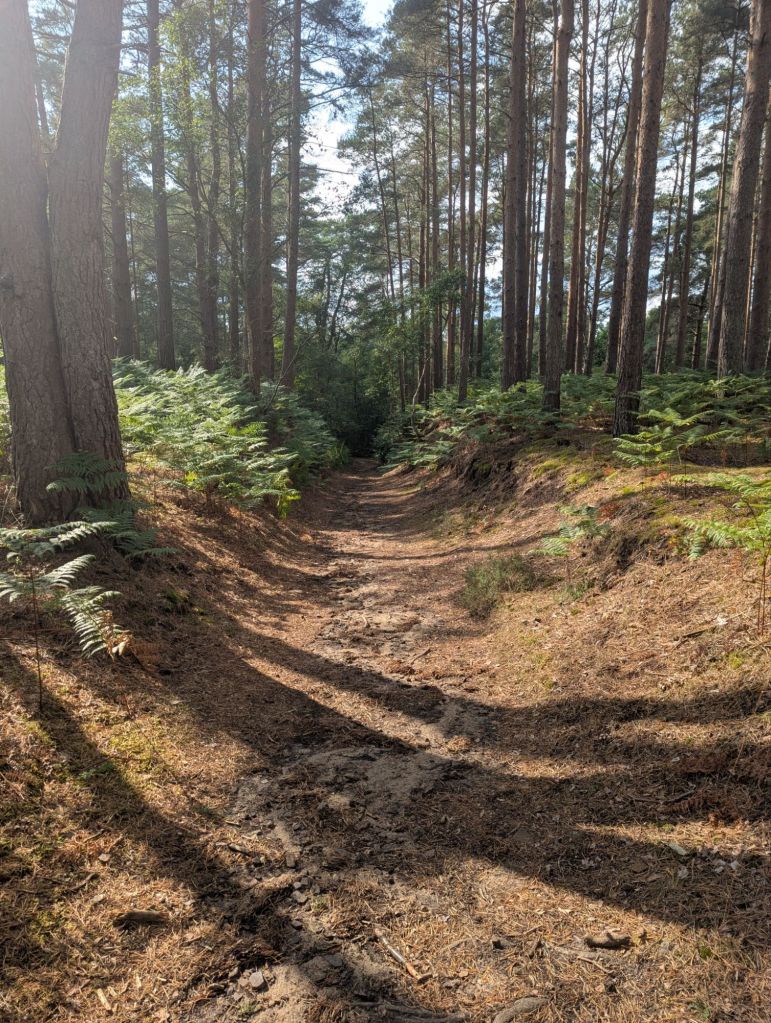
As I walked, I was reminded how fragmented and layered our landscapes are stitched together by private, military and community-owned spaces, each shaping how nature is allowed to thrive or falter. While some areas were fenced off or degraded, others like the MOD land offered unexpected biodiversity havens. It’s a quiet paradox: land set aside for one reason can end up protecting what is wild.
But without a joined-up approach, these pockets risk becoming isolated fragments floating in a patchwork with no real continuity. Who owns the land, and how they choose to steward it, matters deeply. It’s not just about access, but about long-term care, connection, and intention.
If this sparks your interest, The Lie of the Land by Guy Shrubsole is a powerful and accessible read exploring who owns the land in England and what that means for nature, access, and equity.

Walks like this remind me that mindful exploration isn’t just about seeing more it’s about noticing what shapes the land we move through. Listening not only for birdsong but for the stories beneath our feet.
Have you ever stumbled across something unexpected while walking? Or noticed how land ownership changes what grows, thrives or disappears?






 Mindful Trails