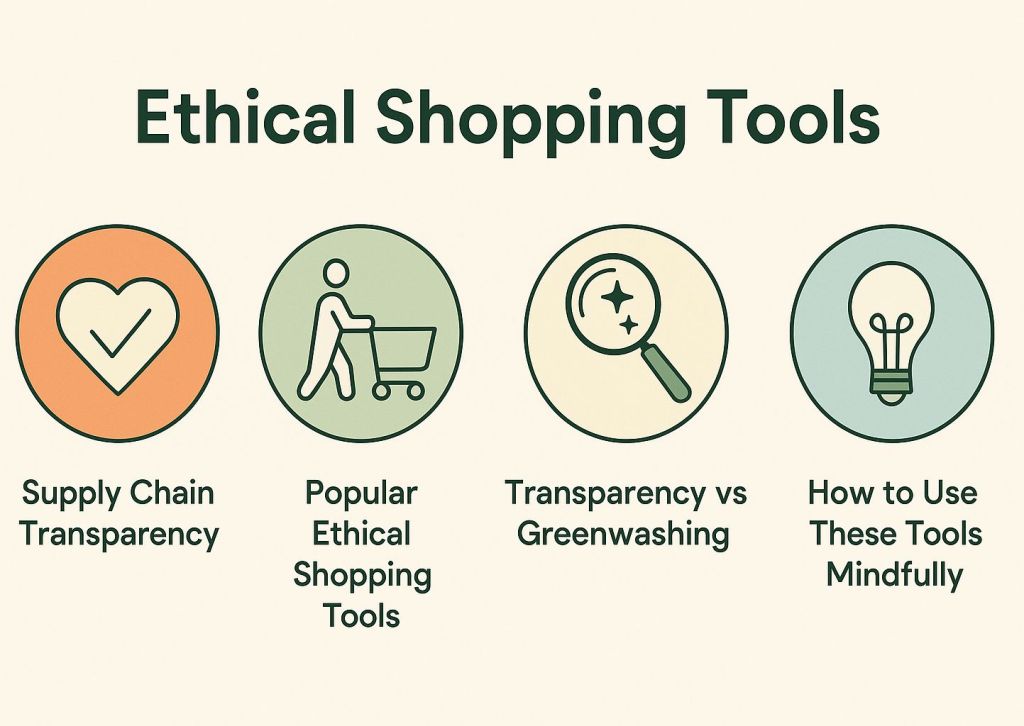
Navigating the shelves (digital and physical) can be overwhelming when trying to align purchases with your values. Ethical shopping tools aim to bridge this gap, making it easier to make informed decisions that support people and planet over profit. But not all tools are created equal. Below, we explore some of the most useful platforms, apps, and rating systems, along with their benefits and blind spots.
🛠️ What Are Ethical Shopping Tools?
Ethical shopping tools are resources, such as apps, websites, certifications, or browser extensions that help consumers assess the environmental, social, and governance (ESG) performance of products or companies. These tools may highlight:
- Supply chain transparency
- Worker conditions
- Carbon footprint
- Packaging waste
- Animal welfare
- Corporate lobbying
- Diversity and inclusion practices
Some tools aggregate scores. Others link directly to independent certification schemes. Some offer community-sourced reviews, while a few dig deeper into the politics behind brands.
🔍 Popular Ethical Shopping Tools
Here are some widely used platforms:
| Tool | Best For | Key Strengths | Key Limitations | Ethical Concerns |
|---|---|---|---|---|
| Ethical Consumer | Comprehensive ethical ratings across multiple sectors | Independent, detailed, transparent methodology | Paywall restricts full access; complex weighting system | Should ethical guidance be monetised? |
| The Good Shopping Guide | Quick ethical brand comparisons | Simple scores; wide UK sector coverage | Less detail on scoring methodology; sometimes lacks depth in narrative. | Does simplicity sacrifice accountability? |
| Switch It | Ethical banking and switching | Action-focused; targets high-impact sectors | Narrow scope; relies on public data | Are we seeing the full financial picture? |
| Soil Association | Organic food, textiles, and beauty products | Trusted UK certification; long-standing credibility | Single-issue focus (organic only); pay-to-certify model | Can small producers compete without the label? |
| Fairtrade Foundation | Fairtrade-labelled food, drink, and textiles | Emphasis on fair wages and global equity | Doesn’t cover emissions or broader corporate practices | Does the label cover the whole story? |
| B Corp Directory | Finding UK B Corps in any sector | Evidence-based audits; widely recognised standard | Includes large corporates; not product-specific | Is B Corp certification slipping into greenwashing? |
🧩 A Note on Transparency vs Greenwashing
While many tools aim to empower consumers, it’s important to stay mindful of how some rating systems or certifications may oversimplify complex supply chains or unintentionally reward superficial improvements. Some may even be funded by the very industries they’re meant to critique.
Ask yourself:
- Who created the tool or label?
- How often is it updated?
- What data is it based on?
- Is the methodology transparent?
Remember: a tool is only as ethical as the system that built it.
✨ How to Use These Tools Mindfully
- Don’t rely on one source – Cross-reference when possible.
- Use them as conversation starters – Especially in communities, families, or with brands.
- Look beyond ratings – Read the fine print and decide what matters most to you.
- Progress over perfection – Let these tools support a journey, not dictate one.
 Mindful Trails
Leave a comment