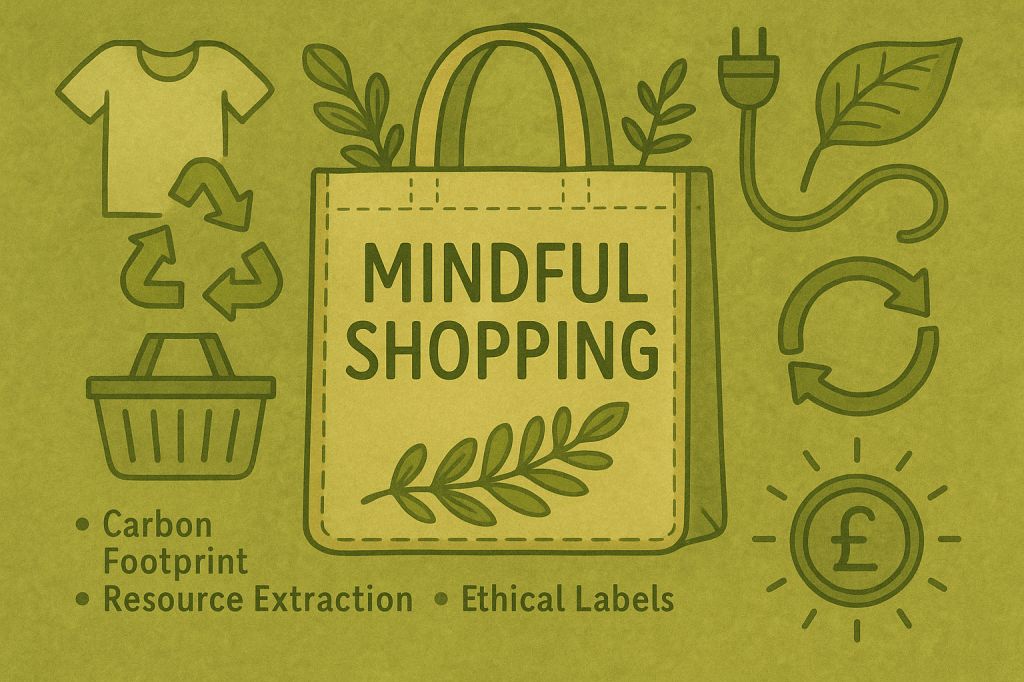
What we buy and where we buy it can have far-reaching consequences. From resource extraction and manufacturing to packaging and end-of-life waste, every product carries a story. Mindful shopping is about slowing down to consider that story before we tap ‘buy now.’
But ethical shopping isn’t always simple. One person’s conscious choice might be another’s compromise. There are nuances, trade-offs and grey zones. A bamboo shirt might have a lower carbon footprint than polyester, but what about the water use? A Fairtrade banana supports farmers, but it may have travelled thousands of miles to reach your basket.
What Is Ethical Shopping?
Ethical or mindful shopping means aligning your purchases with your values by considering not just cost and convenience, but also the impact on:
🌍 The Environment: carbon footprint, biodiversity impact, packaging, water use
👥 People: working conditions, fair pay, human rights, and wellbeing
♻️ Systems: reuse, repair, recycling, and circular economy models
Key Questions to Ask
- What is the carbon footprint and lifecycle of this product?
- How was it made, and by whom?
- Can it be reused, repaired, or recycled?
- Is the company transparent about sourcing and ethics?
- Does this align with what I truly value?
‘Have nothing in your houses that you do not know to be useful, or believe to be beautiful‘
– William MorrisLet your possessions be few, but precious.
Common Ethical Issues
- Resource extraction and habitat loss
- Exploitative labour or unsafe conditions
- Greenwashing and misleading marketing
- Short product lifespans and built-in obsolescence
- Over-packaging and waste
When Buying Less Is Best
Mindful shopping isn’t just about making better purchases, sometimes, the most ethical choice is to consume less altogether. Reducing what we buy helps ease pressure on natural resources, lowers carbon footprints, and challenges the fast-consumption culture we often take for granted. For a broader perspective, check out Earth Overshoot Day, which marks the date each year when humanity’s demand exceeds what Earth can regenerate in that year.
What You’ll Find in This Section
This part of the site explores how to make more mindful choices as a consumer. We’ll share:
- Insights into what ethical shopping does and doesn’t mean
- Tools and resources to help you compare and research
- Practical ideas for shifting buying habits
- Examples of certifications and how to read them
- Reflections on where buying less might be the best choice
We also highlight some known boycotts and activist-led campaigns for those looking to put their spending power behind meaningful change.
Mindful shopping isn’t about being perfect. It’s about being curious, asking better questions, and taking small steps toward a more just and sustainable world.
Ready to go deeper? Explore the topics below:
- What Does Ethical Really Mean?
- How to Spot Greenwashing
- Certifications & Standards
- Ethical Shopping Tools
- Spending for Impact
- Boycotts & Campaigns
- Consumption Reduction
 Mindful Trails