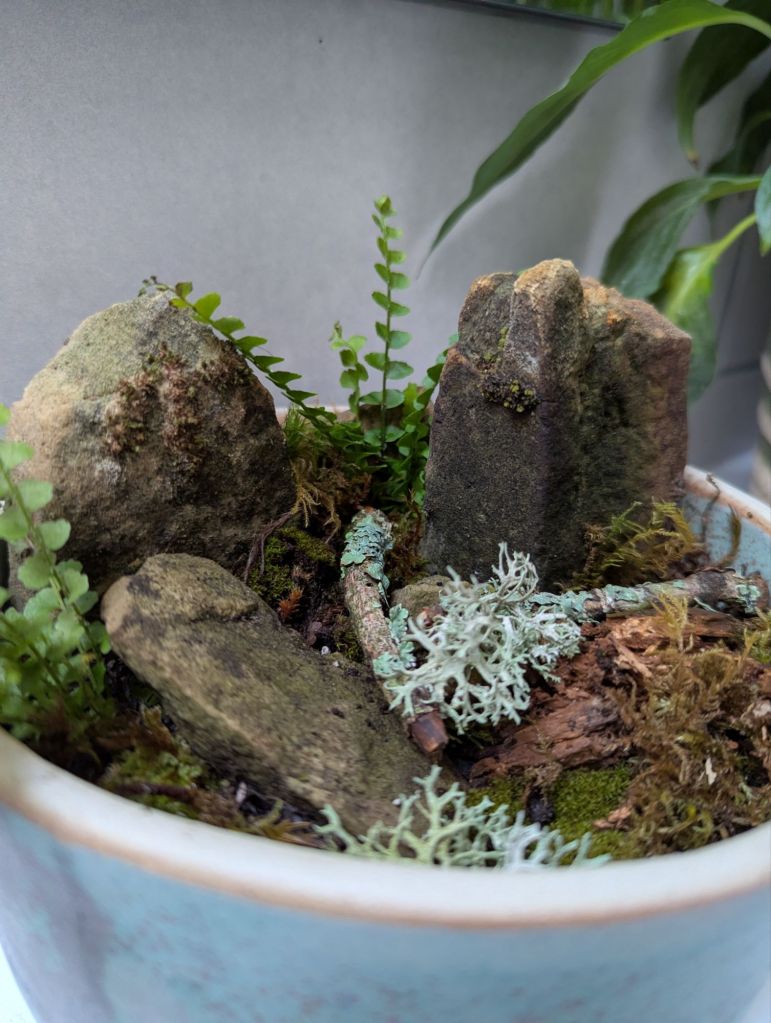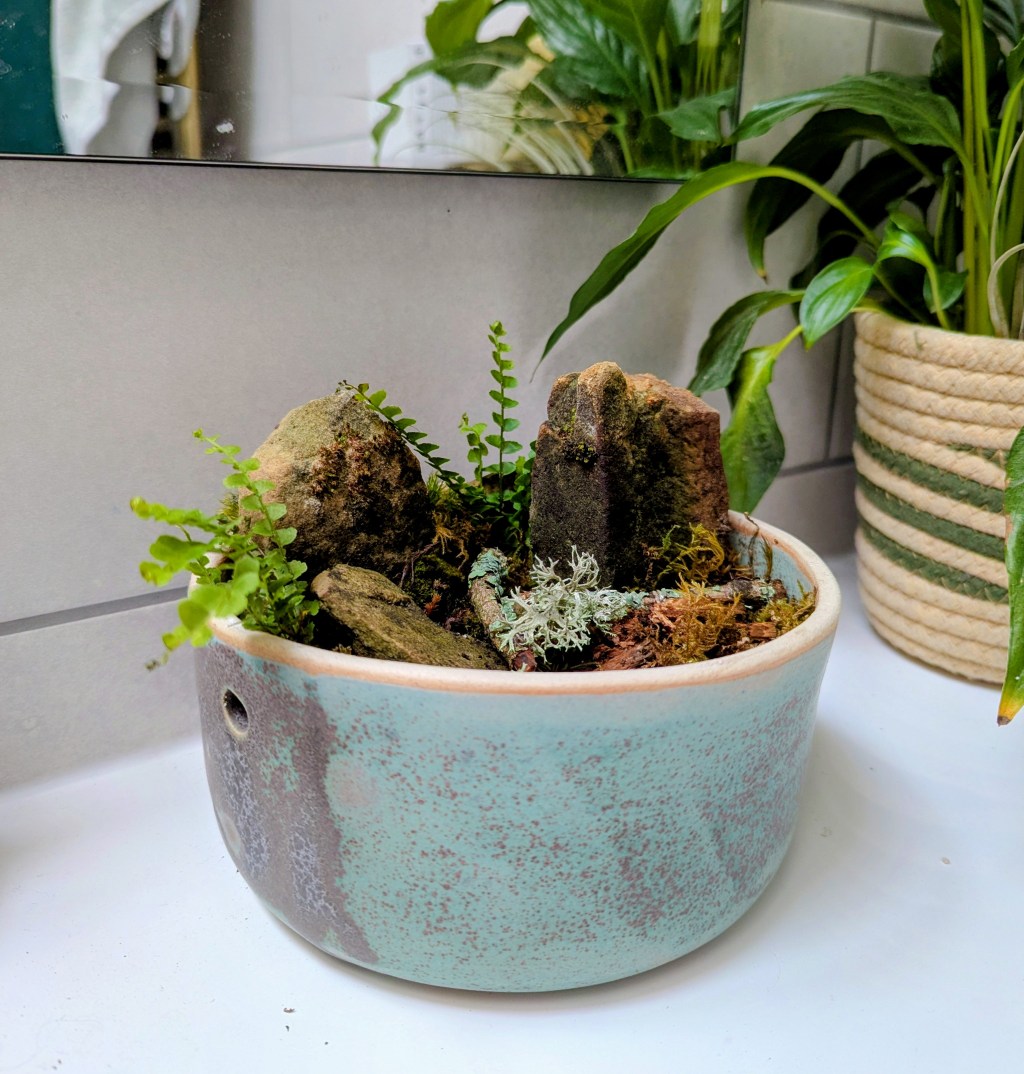
There’s a bowl on my kitchen worktop desk that wasn’t supposed to look like this.
I’m still learning to throw on the wheel, and there’s a particular stage in that process where confidence and emerging skill don’t quite meet. The form I had in mind was a hanging planter, taller and lighter. I repaired the surface cracks before the final glaze firing, but the clay had its own memory. Some of the cracks returned, and the rim distorted in the kiln, possibly as the structure shifted around them. Then during the glazing process I dropped it in the bucket, which left a heavy iron spotting across the teal surface. The result was heavier than intended, cracked, rim askew, and nothing like the hanging planter I’d imagined. But I found I liked the texture and aliveness of the final form.
So I kept it, and it migrated around the kitchen for a while. A fruit bowl for a time, then a sink tidy. Neither felt quite right. It just sat there, waiting to become something.
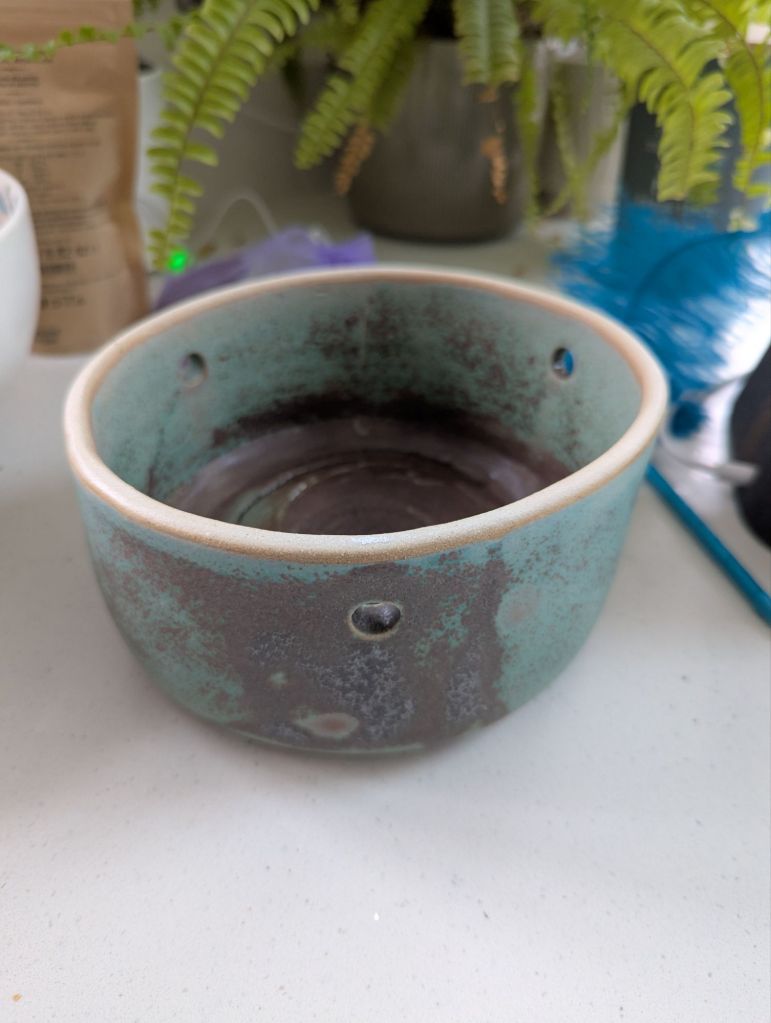
The more I noticed it the more I started to see it differently. Less as a failed version of something else, and more as a form with its own character. The low open shape. The mottled surface that looked, in certain light, not unlike lichen on stone.
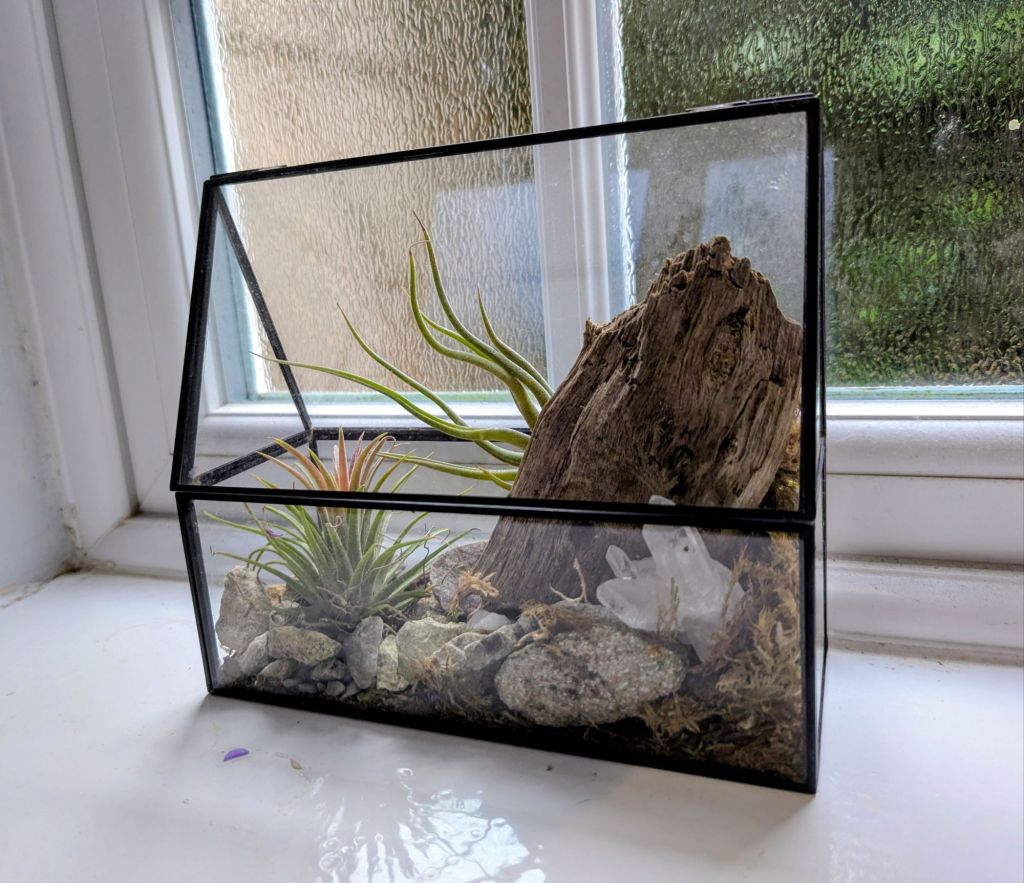
Around the same time I’d been arranging a small landscape in a glass greenhouse on the windowsill: tillandsia, driftwood, stones from a rockery. I found the process of placing and adjusting things more absorbing than I’d expected. It suggested something to do with the bowl.
So I began gathering from the garden: mossy stones, lichen-covered bark, fragments of wood from under the hedge, a small fern. What surprised me was how the gathering changed the quality of attention I brought to ordinary walks. I started noticing different mosses on walls, on the shaded sides of stones, at the base of trees. Not looking for anything in particular, just more open to what was there. A kind of receptive noticing, things arriving rather than being sought.
Though gathering around my garden gave me pause too. Taking moss from a wall, lifting lichen from bark, as each small removal left something slightly less than it was. I found myself thinking that the experience wouldn’t be the same for what remained, and that if everyone did the same we would quietly erode the very thing we were drawn to. I took what felt like enough, and not more than that. But I held the question.
There is even a whole practice around this, books like Miniature Moss Gardens by Megumi Oshima and Hideshi Kimura document the Japanese tradition of cultivating moss as a meditative and aesthetic discipline in its own right. I only came across this afterwards, which felt like a quiet confirmation rather than a starting point.
The arranging of the pot felt similar but slightly different from the gathering. More active, but still coming from the same quiet place. Less thinking, more a sense of intuitive balance. Whether a stone felt right where it was. Whether the scale of things related to each other intuitively.
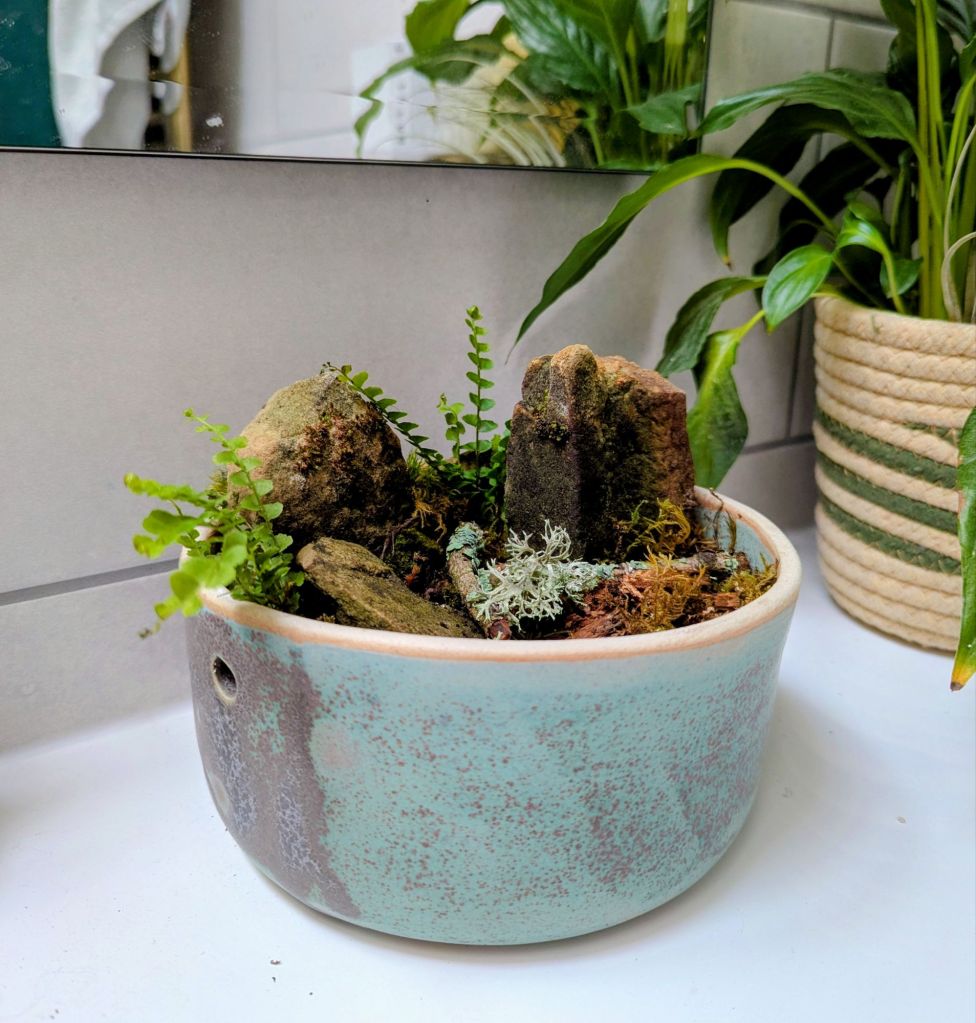
In the Japanese calendar of 72 micro-seasons, that date falls within Shimo yamite nae izuru, ‘frost stops, and seedlings emerge.’ The point when growth is no longer at risk of being cut back before it takes hold. I didn’t know that at the time.
Not all of the moss will survive. Some is already adjusting, and it’s not yet clear what will settle. That feels like an honest part of the experiment. Tending something living means accepting that it will change on its own terms.
Beltane fell a few days ago, on May 1st, the old Celtic threshold between spring and summer, traditionally a time for tending and paying attention to what’s growing around you. A bowl of moss is a modest version of that. But the noticing it prompted, on walks, in the garden, at a windowsill, felt like something worth practising.