The Guardian released the powerful short documentary Guilt Trip: pilots torn between flight and the fight for the planet on July 10, 2025. It explores the emotional conflict faced by pilots who love their jobs but are haunted by aviation’s role in climate breakdown.
Tensions We Share as Travellers
At Mindful Trails, this documentary echoes a familiar tension: the deep pull toward adventure and discovery, balanced against a growing awareness of our planetary limits. We love to travel for its ability to open perspectives, create memories and connect us to the wild and the wondrous. But like the pilots in Guilt Trip, we often find ourselves asking: at what cost?
Do we ground ourselves? Travel differently? Focus on slower, more local adventures? These questions are part of our ongoing inquiry.
What the Film Covers
Firsthand climate conflict: Ex-commercial pilots George Hibberd and Todd Smith reflect on childhood dreams of flying, now complicated by guilt at contributing to climate change
Emotional reckoning: The doc follows their journey from aviators to climate activists, highlighting aviation workers grappling with eco-anxiety and moral responsibility
Community action: It showcases their involvement with Safe Landing, a community that supports aviation workers through worker-led assemblies to envision climate action within the industry
Takeaways & Reflection Prompts
Insight
Why It Matters
Guilt can be empowering
It invites responsibility, not paralysis. The film urges us to act not from shame, but from care.
Adventure can still be conscious
The joy of exploring doesn’t have to be abandoned but it does call for honesty, creativity and re-calibration.
Personal and systemic
It’s not just about reducing flights, it’s about re imagining mobility in ways aligned with ecological integrity.
Mindful Next Steps
Watch the film: Stream it on the Guardian Documentary channel and notice what is brings up for you.
Reflect on your own relationship with travel: What do you want to hold onto, and what are you willing to change?
Explore local trails, seasonal adventures, or slower modes of travel as ways to align values with action.
By bridging the emotional core of travel with climate consciousness, Guilt Trip offers a deeply human perspective urgently relevant to mindful travellers everywhere.
There’s something timeless about playing in water, whether you’re a child splashing through a shallow stream or a parent trailing your fingers in the current. It’s free, fun, and grounding. In the spirit of slow family adventures, here’s a curated selection of streams and rivers around Surrey and Hampshire that are perfect for a paddle, a picnic, or a peaceful moment by the water.
Frensham Great Pond, Surrey A popular Green Flag Award winning site with sandy shores and calm waters. Great for younger children. Early mornings are quieter. There are clearly defined designated bathing areas.
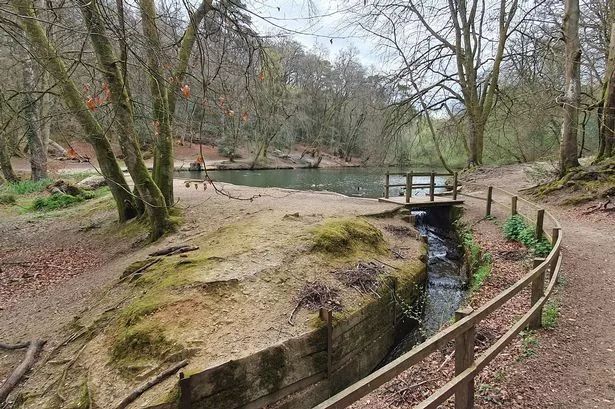
Waggoners Wells, Hampshire Woodland paths, interconnected ponds, small streams, and a wishing well make this spot feel like a fairy-tale forest. Ideal for small-scale adventures.
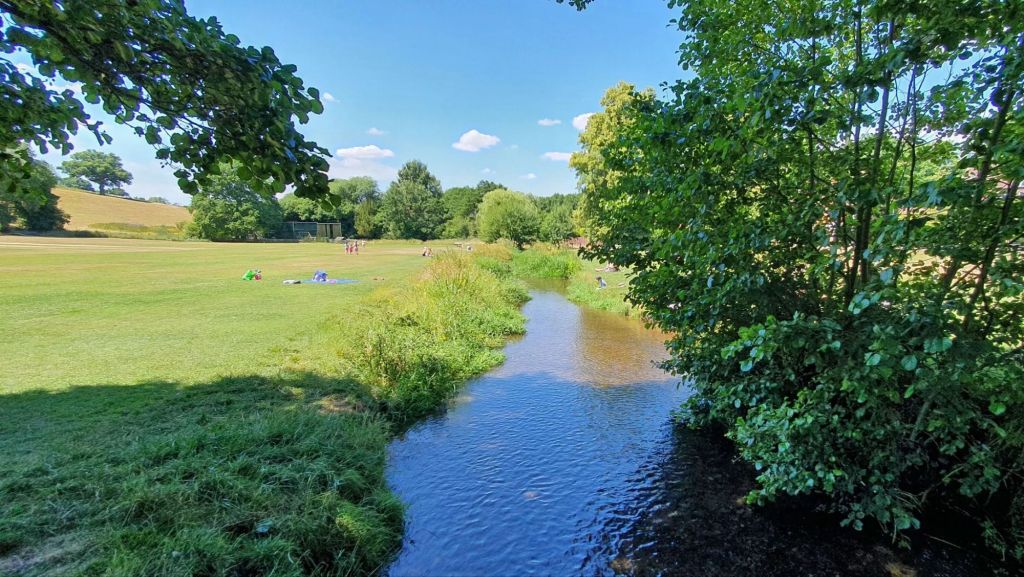
Gostrey Meadow, Farnham, Surrey Right in the centre of Farnham, this park features a shallow stream running through a landscaped meadow. Perfect for quick visits, with a playground nearby and lots of space to picnic.
Abinger Hammer, near Dorking, Surrey A classic Surrey spot with a shallow stream, grassy picnic areas, and a gentle current ideal for barefoot paddling. Watch out for ducks and a great little ice cream shop!
Bonus: A Little Further Afield – Wowo Campsite, East Sussex If you’re up for a short trip beyond Surrey and Hampshire, Wowo Campsite in East Sussex is well worth a night away. This family-friendly site features a shallow stream running right through it, offering hours of water play, mini bridges, and muddy fun. Combine with campfires and woodland walks for a full slow adventure.
🧺 Tips for Mindful Water Play
Go early or midweek for a quieter experience
Bring a towel, a change of clothes, and water shoes
Pack a picnic and stay a little longer than you think you’ll need
Let children lead the way, they’ll find magic in the smallest ripple
These spots can become mini adventures with minimal planning. Wherever you go, take your time, tread lightly and leave no trace.
📍 Know a stream we should add to the list? Add it to the comments below.
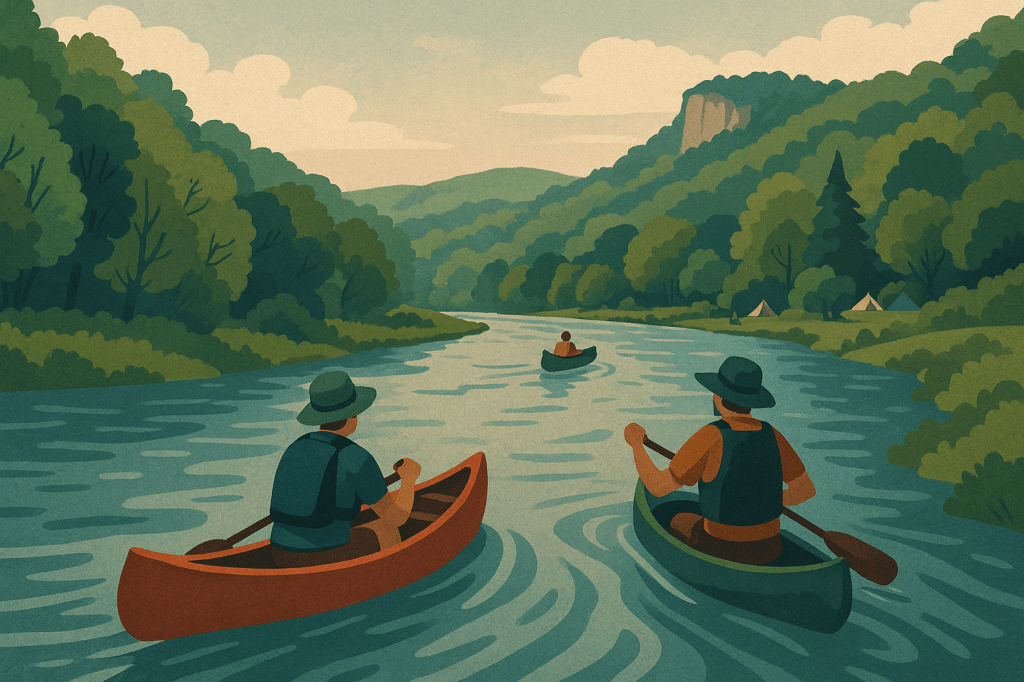
Sometimes the most memorable adventures come not from rushing across landscapes, but from gliding gently through them. Our canoe trip with friends on the River Wye, from Hoarwithy to Symonds Yat, was one of those slow adventures that imprinted itself with quiet strength.
🛶 Paddling the Route – Hoarwithy to Ross-on-Wye
We launched our Canadian canoe at Hoarwithy, a sleepy hamlet where the River Wye curves through quiet countryside. Our plan: a two-day paddle to Symonds Yat, with a night under canvas near Ross-on-Wye.
The water here is calm and welcoming, ideal for easing into the rhythm of paddling. Fish were leaping on the surface of the calm surface, herons rising silently from the margins, and the riverbank felt alive with subtle movement. We passed under charming bridges and occasionally historic landmarks tucked among the trees.
Drifting at midday for a simple riverside picnic, we soaked in the birdsong and reflections dancing on the water. The occasional drizzle only made it feel more alive. The paddle itself remained relaxed and scenic throughout.
We arrived in Ross-on-Wye by late afternoon, where we set up at Ross Rowing Club & Campsite, a peaceful riverside spot perfect for unwinding. You could just as easily choose a cozy bed and breakfast or a room in town, but camping kept us close to the river.
🛶 Day 2: Ross-on-Wye to Symonds Yat
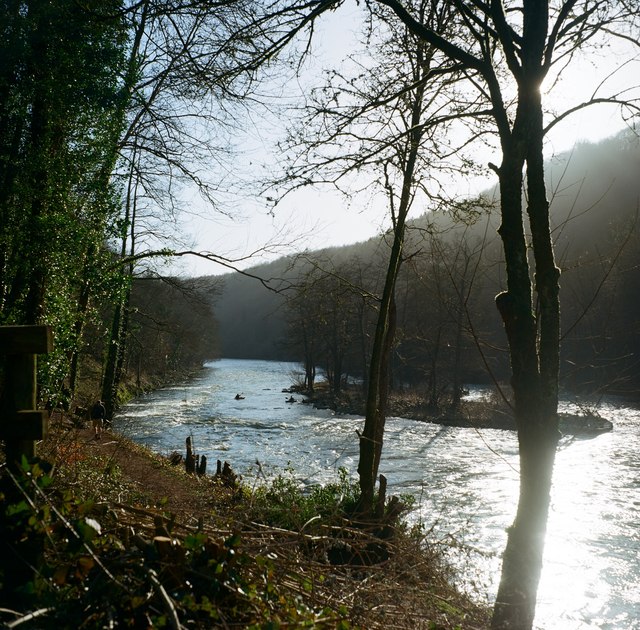
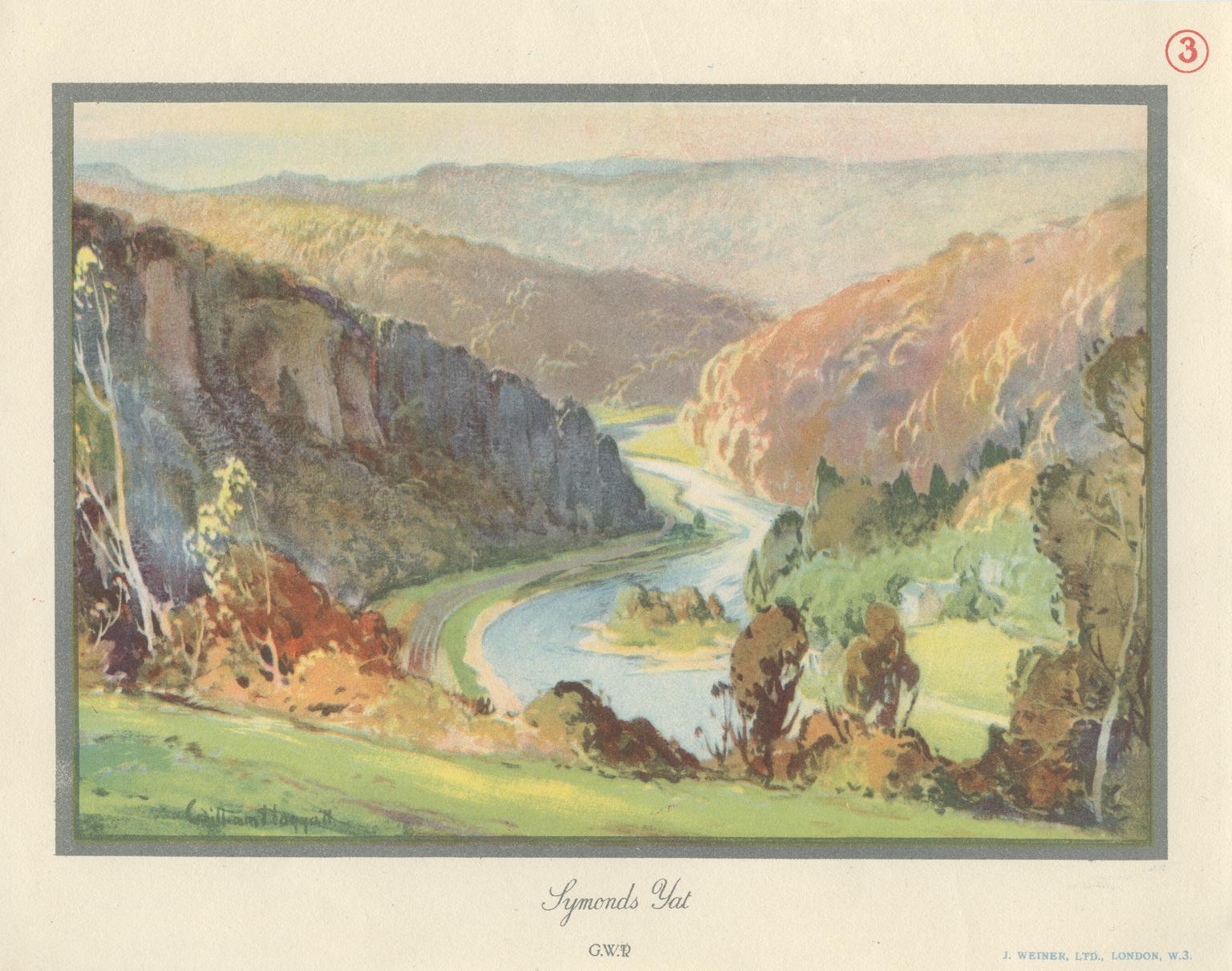
Day two began with low clouds and the soft scent of light rain and wet trees. We packed up and returned to the river, the current just strong enough to keep us moving steadily. This stretch was perhaps even more scenic, winding past sandstone cliffs and forested banks.
As we approached Symonds Yat, the cliffs grew steeper and the valley narrower. With some apprehension we then successfully navigated the final rapids with a mix of fun and adrenaline that marked a thrilling close to the paddle. Shortly after we were met at the end point by our canoe hire team.
To finish, we hiked up to Symonds Yat Rock viewpoint, a breathtaking overlook where we could trace the route we’d just paddled. The view offered one last moment of reflection, a quiet triumph at the end of our river journey.
Along the way, we’d glided through tranquil meanders, shaded woodland, and past silent herons taking flight. Of course, no adventure is without its hiccups as at one point we managed to flip a canoe while close to the bank, leaving one of us thoroughly soaked and the rest of us laughing. But those moments only deepened the memory.
We chose to paddle independently as we already had some experience, but experience is not necessary as the Wye is a well-supported river for both experienced and new paddlers. Several local companies offer guided options, gear hire, and route suggestions for those who prefer a little backup. Click here for more information.
🌱 Reflections
What made this trip so satisfying wasn’t just the movement, it was the stillness it made room for. Moments between paddling, watching mist rise from the water, or stopping for riverside snacks reminded us why we love slow travel. This trip would be ideal for couples, friends, or even adventurous families looking for a gentle, nature rich escape.
”Sometimes the most memorable adventures come not from rushing across landscapes, but from gliding gently through them.”
Whether you’re chasing a short break or planning a longer paddle, the Wye offers space to breathe and scenes that linger long after the river bends out of view.
If you’ve ever watched Race Across the World and thought, “We should do something like that,” you’re not alone. We created our own DIY version—a family race to the Isle of Wight, with public transport, a small cash budget, and one big twist: our children were in charge.
Final destination: The Needles Chair Lift lower station
The idea was to encourage confidence, planning, and decision-making in a fun and unpredictable way.
Planning Under Pressure
Before we even left home in Farnham, the kids were given just 20 minutes to plan a route with some basic information and a train map. They didn’t know when the trains left or how to get to the ferry ports. They had to ask for directions, talk to staff, and piece together the journey step by step.
It was eye-opening to see how quickly they adapted. From the very first challenge—finding the train station without knowing the way—they leaned into asking questions, spotting signs, and thinking on their feet.
Parallel Paths
Both teams independently chose to head to Southampton, and we even ended up in the same hotel for the first night. That added a cheeky layer of tension as we tried to dodge one another in hotel corridors and breakfast buffets—fueling the playful spirit of the challenge.
Accommodation wasn’t pre-booked for the first night, so the kids had to ask prices at the front desk and decide what was acceptable. One team even benefited from a lucky room upgrade after chatting to a kind staff member—just one of the many unscripted moments that made the experience so memorable.
Letting the Kids Lead
What surprised us most was how confidently the children stepped into their roles as navigators and leaders. They approached bus drivers, train guards, ferry staff, and fellow travellers with questions, soaking up real-world experience in problem-solving and communication. They took genuine pride in explaining the race to curious onlookers—often with a big smile.
Extend or Condense It
Although this version was based around the Isle of Wight, the concept could be easily replicated anywhere. If you’re in the southeast of England, Woking or London are excellent starting points with multiple onward routes.
Some additional reflections:
Add an overnight stay to stretch out the fun and reduce stress.
Pre-book onward accommodation if you’re travelling during peak times—but keep the journey itself unplanned for spontaneity.
Short on time? You can complete the whole adventure in one day, depending on your starting point.
How to Plan Your Own Family Race
If you’re feeling inspired, here’s how to get started:
1. Choose a Final Destination
Pick a location that’s reachable by public transport and interesting enough to make the journey feel exciting. Coastal spots, national parks, or quirky towns work well. The Isle of Wight was perfect because it required a ferry crossing and had natural waypoints like the Needles to aim for.
2. Set Simple Rules
Our ground rules were:No phonesCash onlyPublic transport onlyAdults supervise but don’t lead You could tweak this to suit the age of your children or group size. For younger children, allow limited phone use for emergencies only or set check-in times.
3. Split into Teams
Two teams kept things fun and competitive. If you’re a larger family, consider more teams or even joining forces with another family for a bigger challenge.
4. Add a Surprise or Twist
We loved not telling the kids the train times. It added a real sense of discovery and required them to interact with the world, not just follow instructions. You could also add a mini-challenge along the way: find a landmark, try a local food, or get a photo with a stranger who’s visited your destination before.
5. Build in Reflection Time
Whether it’s a shared meal at the end or a few days staying on at the destination, make space to decompress, laugh, and reflect on the journey. These are the moments that will stay with everyone.
Final Thought
In a time when everything is mapped, reviewed, and streamlined, this adventure gave us something beautifully unfiltered and real. It reminded us that not knowing is part of the fun—and that sometimes, the most rewarding adventures are the ones we don’t over-plan.
If you’re considering your own family race, I highly recommend giving it a try. You might start with a little nervousness, but you’ll end with a whole lot of pride, laughter, and stories to tell.
And who knows? Your kids might just surprise you—in all the best ways.
Sometimes the best way to connect… is to disconnect.
🗂 Download our original planning PowerPoint
Curious how we set it up? Click here to download our route planning PowerPoint and use it as a template for your own family race








 Mindful Trails